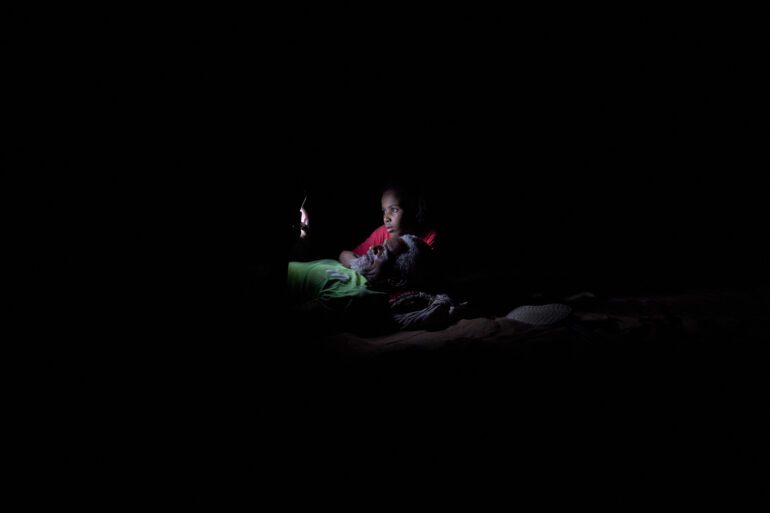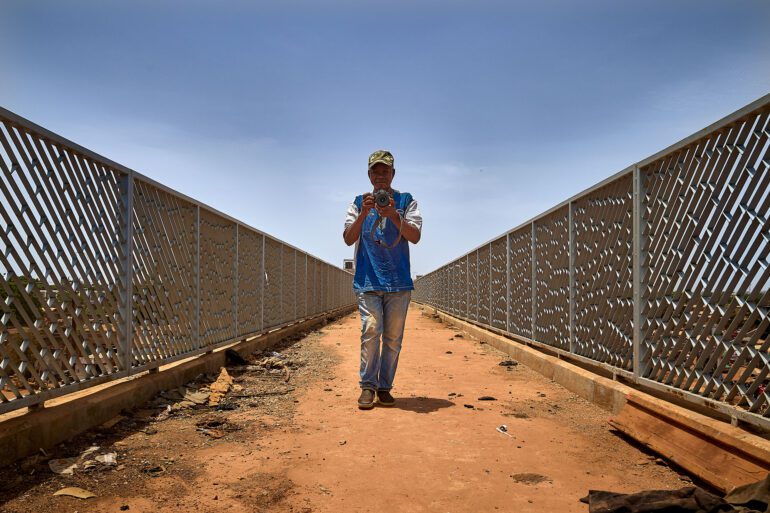
The first phase of the project is now complete: the journey, our time living in Camp Erech, and the creation of the first body of work. At the center of it all is Riccardo — and his story.
I’ll keep it simple. I’m grateful to have finally met him, to have shared daily life with him and his family (where matriarchy quietly but clearly sets the tone), and to have entered — fully and without filters — into many deep, often delicate conversations. I can now say without hesitation: this story needed to be told. They’ve all become deeply important to me.
The Land
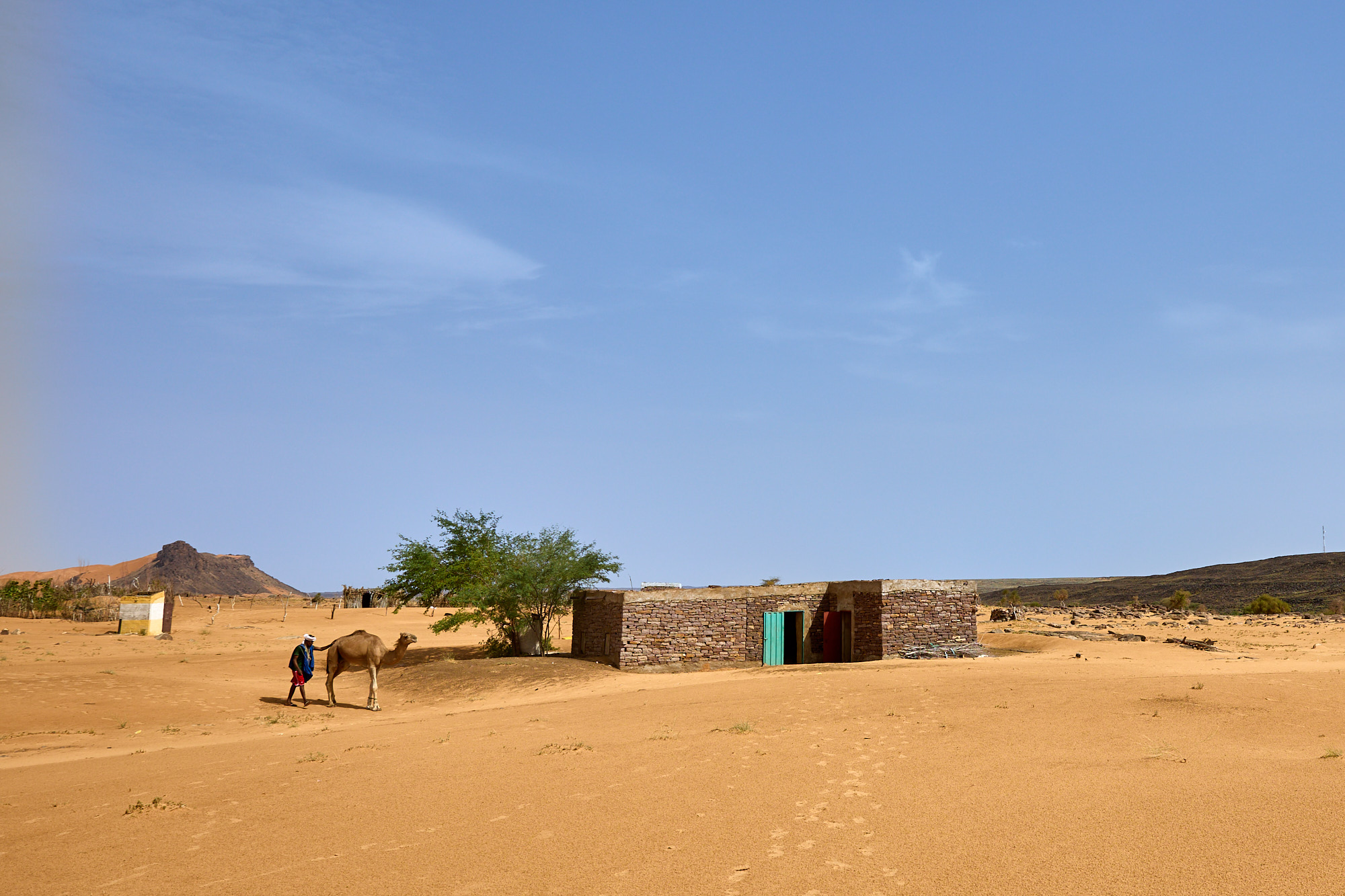
Mauritania — or at least the Adrar region we visited — is striking. Raw, generous, unexpectedly welcoming. I would recommend a visit to anyone drawn to wide spaces and essential questions.
The desert went far beyond what I imagined. Even with the heat, the dust, and sand that gets into everything, I felt at home — in a place that felt both demanding and exactly right.
Nouakchott, the capital, didn’t charm me in the same way, but it has its own interest. It’s a good place to witness the contradictions that define many large African cities today.
And for the record: Mauritania felt safe. Very safe. Not once in 45 days did we witness violence, theft, or even a serious argument — and I’ve traveled in more than 50 countries. I don’t have an explanation, but I suspect this atmosphere has something to do with the absence of alcohol and drugs. Of course, this doesn’t mean the country is without tensions. But the sense of calm is real.
The Work
Technically, everything held up. Our gear functioned well, even under stress. We lost two UV filters to the wind — they were practically sandblasted during a storm — and a dust brush didn’t survive the trip. But overall, the equipment came through unscathed.
We did too. Aside from a thorn in Giulia’s foot, we had no health issues. The first few days were tough: the heat, the lack of refrigeration, the water fatigue. But once we began drawing water from the well and cooling it with what Mauritanians call “the local fridge,” we adjusted. We were drinking over 20 liters of water per day. And somehow, nothing was missing.
The Economics
Thanks to the funds Ayzoh! had secured from past work, we were able to carry out this first phase entirely on our own. That said, the crowdfunding campaign isn’t going well. I didn’t expect much — we’re not structured for that kind of outreach.
And let’s be honest: when you share a platform with institutions like the Municipality of Milan or the Venice Biennale, it’s hard to be visible. (Personally, I find it problematic that publicly funded entities compete in the same space as independent groups.)
Still, we’re grateful for the contributions we’ve received. They helped. And since you never know, we’ll keep the campaign open until December 31.
But we’re not naive. We know support will come from elsewhere — through the editorial work born from this project, through exhibitions and festivals, and, above all, through new commissions made possible by what we’ve accomplished in Mauritania.
The Human Side
Experiences like this — especially when they’re this intense — do more than produce results. They expand your sense of what it means to be human. They shift your emotional coordinates. They clarify.
This journey gave me much. Riccardo and his family are now part of what I call home. I’ll carry them with me.
And I had the good fortune to meet Francesca, someone who gave us so much — I’m sure a strong friendship will grow from this.
Traveling with Giulia was another kind of gift. Despite our age difference and very different personalities, we shared this experience in near-complete harmony. That’s rare. Of course, we had tense moments — some my fault, some hers. But when people are honest and know how to say “I’m sorry,” those moments don’t break the relationship. They make it stronger.
Not everything went well. Some people backed out. Some didn’t keep their promises. Others reminded me — once again — that some human behaviors are hard to accept: hypocrisy, opportunism, and lack of respect. But this is part of the process. It teaches you.
Journeys like this help you tell what’s real from what’s fake. What matters from what doesn’t. What will last from what won’t.
They help you choose where to stand — and who to walk with.
And in the end, as Saint-Exupéry wrote in the lines that inspired this project, these experiences — whether lived or told — serve one essential purpose: to reveal what your gods are made of, and how much they are really worth.