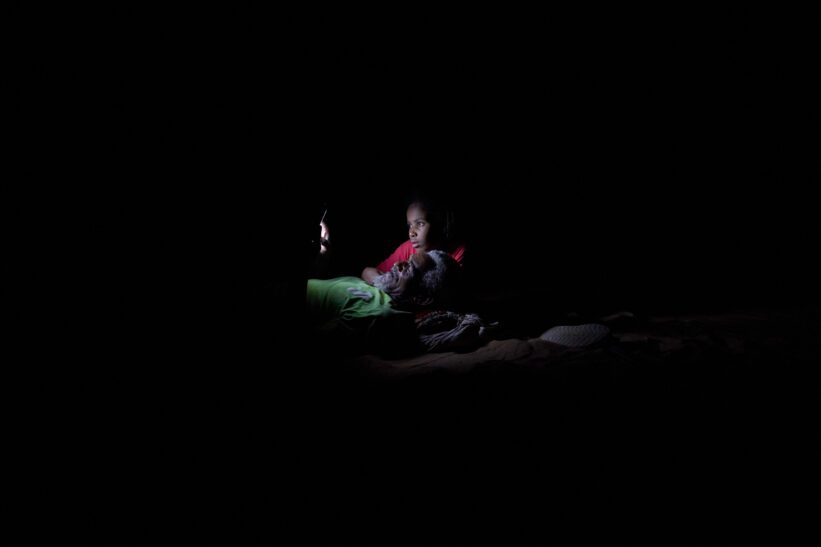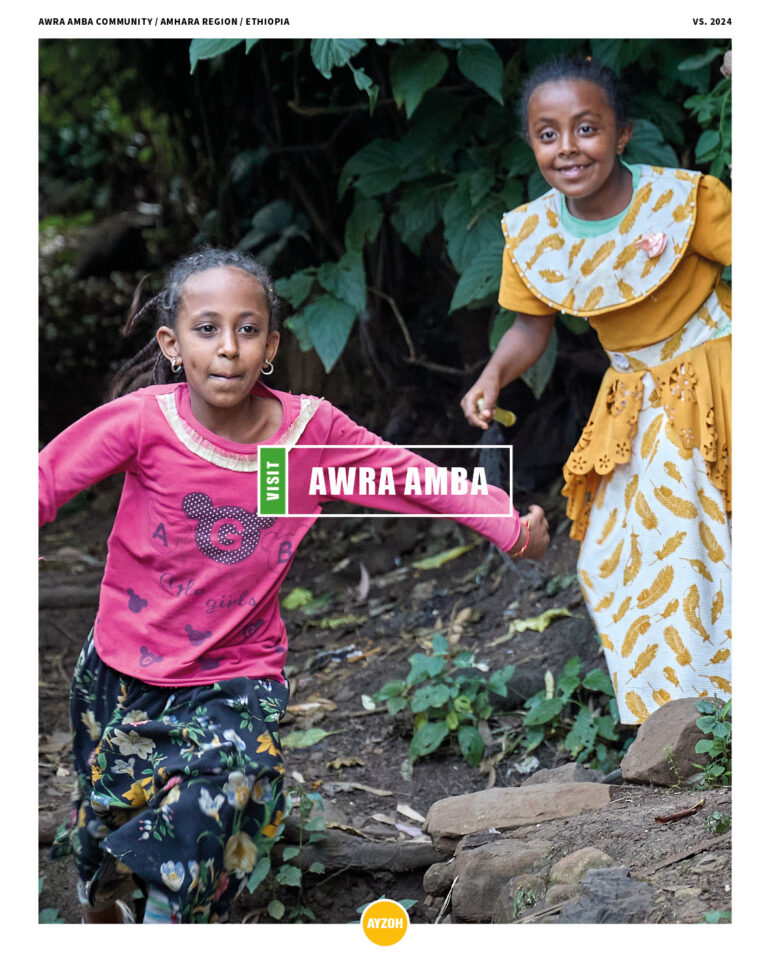
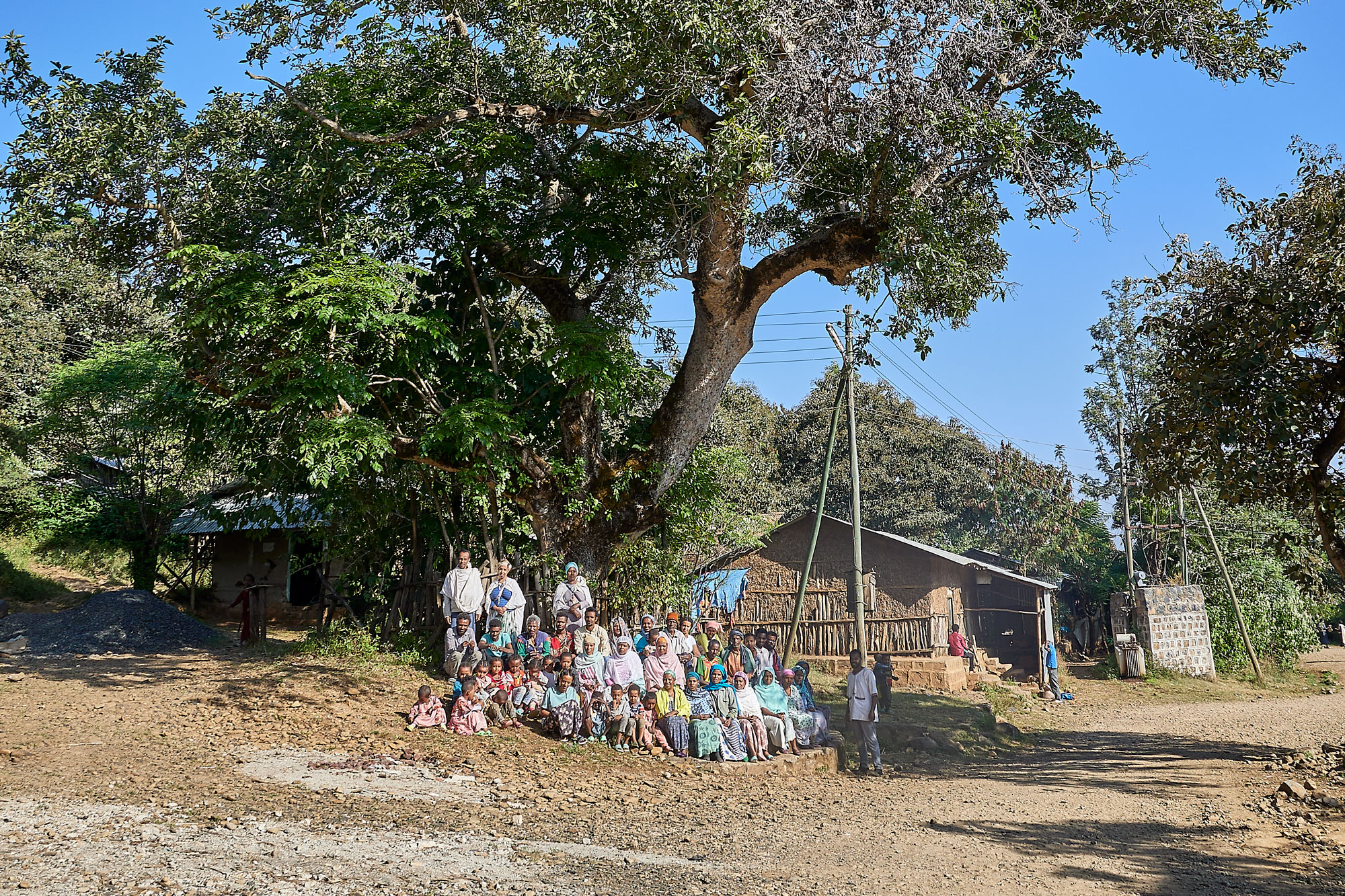

Awra Amba is a unique community in Ethiopia known for its alternative approach to societal organization and communal living. It was founded in 1980 by Zumra Nuru, who sought to create a community based on principles of equality, gender equity, and sustainability.
The community requested Ayzoh’s intervention to create a storytelling project and communication system that would allow the village to manage its image in a sustainable, independent, and unfiltered way.
In addition, the region where the community is located is currently affected by ethnic conflict. In this context, the Awra Amba Project is even more relevant to provide the community with the necessary media tools to reinforce the message of peace, dialogue and respect for all diversity that has characterized it since its very beginning.
About Awra Amba
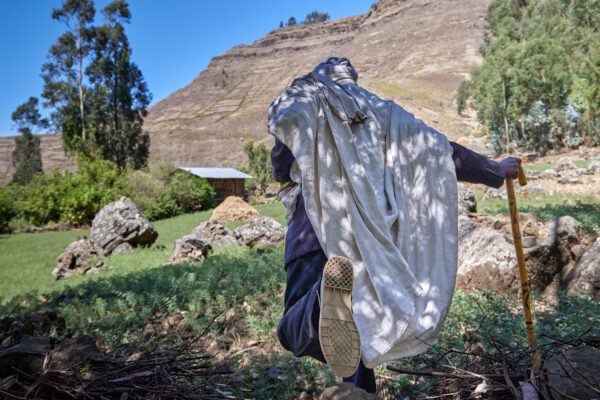
Awra Amba is located 68 kilometers from Bahir Dar, the capital of the Amhara region, and 620 kilometers from Ethiopia’s capital, Addis Ababa. The community was founded in the 1980s by Zumra Nuru, who transformed an agricultural village into an innovative community based on gender equality, job sharing, and quality education for all.
Gender equality. The community is known for its gender equality: in Awra Amba, men and women work together in all professions, including agriculture, handicrafts, cooking, and child care.
Quality education for all. The village has its own school and provides quality education for both children and adults. Adults are also encouraged through special programs to pursue training to better develop their personal talents.
Responsibility and active participation. Awra Amba emphasizes the relationship between individual responsibility and community decision-making. Important decisions are discussed and made collectively through a truly democratic process. All residents, including the youngest, are involved in relevant social activities.
Economic justice. Income from community activities – agriculture, handicrafts, tourism, etc. – is distributed equitably. This has led to a radical reduction in poverty and better living conditions for all.
Culture of peace. The community emphasizes respect for diversity – cultural, ethnic, religious, etc. – and the importance of dialogue in resolving conflicts. This attitude is recognized by all in Ethiopia and, in fact, the community has never been affected by the various wars that have taken place in the region.
What we will do together with the community of Awra Amba
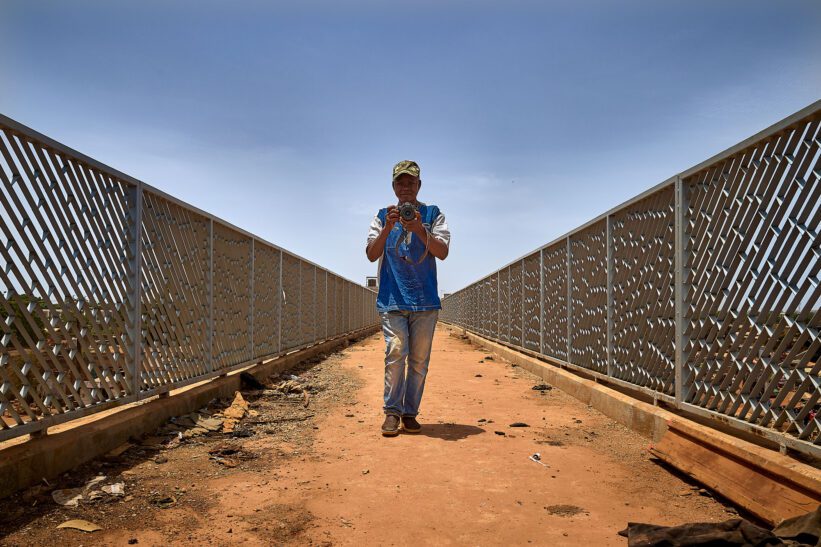
The first step will be to create a large photographic record of daily life in the village. The approach of our photographers will be — as is Ayzoh’s style — deep, intimate, collaborative and slow. After a short course in photographic techniques, girls and boys from the community will also participate in the report. It will be a collective effort.
The second step will be the creation of an online magazine, designed and produced locally, to enable the village to take the reins of its own communication and, consequently, to strengthen the uniqueness, identity and inspirational capacity of the community.
The magazine and all of its content will be owned by the village. Therefore, we will work with the girls and boys of Awra Amba in this phase as well: in order to make the magazine sustainable over time, it is important that they master the techniques needed to manage it technically and to feed it with new content.
The final phase of the project will be the creation of a book and a video documentary to document the entire experience. A collection of collectible photographic prints will also be produced. Finally, all of this will be condensed into a traveling multimedia exhibition.
Timing
When: from october to december 2023 / Work team: Two Ayzoh! professionals will be in the field at all times. They will be supported by our social researchers based in Ethiopia and Italy. Some of Ethiopia’s most renowned photographers and artists will join the project / Costs: covered by Ayzoh! (80%) and by its sponsors, Apptvit and Greenit (20%) / Equipment: provided by Ayzoh!.
Why Awra Amba is an important experience for the whole world
In Europe — as well as wherever a lifestyle based on financial Darwinism is imposed — we are losing a sense of community in favor of individualism and self-centeredness, which are perfectly functional for maintaining the status quo.
The results are there for all to see, and it is obvious how these phenomena are particularly nefarious for the most vulnerable and weakest social classes.
For this reason, we believe that telling the story and the daily life of Awra Amba — in depth — can be an extraordinary stimulus to reflect on “possible utopias” and to nourish the vision that another life, another way of acting for the good of ourselves and our neighbors, is possible.
What we mean by “sense of community”
By sense of community, we mean the sense of belonging and connectedness that individuals feel when they are part of a group, such as a neighborhood, workplace, or social network.
Sense of community is the shared understanding that members of a community have of their common goals, interests, and values.
Sense of community is characterized by feelings of mutual support, trust, and cooperation. It is the feeling that individuals have that they are part of something larger than themselves and that they have an important role to play in contributing to the well-being of the group.
It can also lead to more effective problem solving, greater social cohesion and a stronger sense of collective identity. Awra Amba is able to demonstrate that all of this is possible and desirable.
Awra Amba reminds us why a genuine sense of community is important to the well-being and freedom of each individual
A strong sense of community is a valuable resource for individuals, providing a sense of purpose, support, and connection to others. This has many benefits, including a greater sense of personal satisfaction and greater resilience in the face of adversity.
Increased sense of belonging: When people feel they have a role to play in a community, they are more likely to feel accepted, included and valued. This leads to greater social connectedness, which can help combat feelings of isolation and loneliness.
Improved mental health: Knowing they belong to a community helps people cope with stress, anxiety and depression. Everyone needs to find meaning and purpose in their lives.
Increased social support: A community provides individuals with a social support network. This can help cope with difficult situations such as illness or loss, and is a constant source of personal encouragement and motivation.
Opportunities for personal growth: Being part of a community can provide individuals with opportunities for personal growth and development. Starting from a level playing field, everyone has the chance to learn new skills, take on leadership roles, and contribute to the well-being of the group.
What is community photography and how will it be used in Awra Amba?
Community photography is a form of photography that involves working with members of a community to document their lives, experiences and perspectives. It is a way to give voice to those who may be marginalized or underrepresented and to show the diversity and richness of different communities.
Community photography projects can involve photographers working with community members to identify issues and themes that are meaningful to them, and then using photography to capture images that reflect those stories and experiences.
The resulting photographs can be displayed in public spaces or shared online, providing a platform for community members to share their perspectives and raise awareness of important issues.
Community photography can be used for a variety of purposes, such as promoting social change, documenting cultural heritage, or simply fostering a sense of connection and understanding among different groups of people.
It is a collaborative and inclusive form of photography that enhances the perspectives and experiences of those photographed and seeks to give voice to those who may not have had the opportunity to be heard.
Through participatory reportage, Awra Amba community members are actively involved in the process of creating and sharing their stories. This approach is based on an obvious, but rarely applied, idea in the world of journalism: the people who live and work in a community are the best experts on the issues that affect them.
How the work of Ayzoh! can strengthen the community
Overall, photography can empower a community by preserving its cultural heritage, building a sense of identity, raising awareness of social issues, promoting social change, and creating new opportunities.
The work of Ayzoh! can then be a powerful tool for preserving a community by documenting history, cultural heritage, changes over time, sharing stories, and inspiring action. It can help ensure that a community’s traditions and culture are not lost over time and can be shared with future generations.
Preserving cultural heritage: Photography can document a community’s traditions, practices, and ways of life, preserving them for future generations. It can help people connect with their roots and keep their culture alive.
Building a sense of identity: Photography can showcase a community’s unique qualities to help it feel proud of who it is. Capturing images of the community in action can highlight its strengths or stimulate discussion about its weaknesses.
Raise awareness: Photography can raise awareness of social issues that affect a community. By capturing images of people and events, photographers can draw attention to issues that might otherwise go unnoticed.
Promoting social change: Photography can be a powerful tool for promoting social change. By including people in a compelling story, photographers can inspire people to take action and make a difference in their community.
Providing Opportunities: Photography can provide community members with new opportunities for personal growth. For example, a comprehensive photography course can provide education and training to young people who have never had access to such resources. This can lead to future careers in the arts, publishing, advertising, or other fields.
Documenting History: Photography can capture important moments in a community’s history, from significant events to everyday life. These images can serve as a historical record of the community, preserving its traditions and culture for future generations.
Preserving cultural heritage: Photography can document cultural practices, rituals, and art forms that are in danger of being lost over time. By capturing these images, photographers can help ensure that these traditions are not forgotten.
Capturing change: Photography can document changes in a community over time, such as urbanization or environmental degradation. These images can help raise awareness of these issues and inspire action to address them.
Sharing stories: Photography can tell the stories of people and communities in ways that words cannot. By capturing images that convey emotion and tell a story, photographers can help share a community’s experiences with a wider audience.
Inspire action: Photography can inspire people to take action to preserve a community. By capturing images that showcase the unique qualities of a community, photographers can help raise awareness and inspire people to take action to preserve culture and traditions.
Organizations involved and working team
Due to the complexity of the project and the issues it addresses, Ayzoh! relies on the collaboration of partners who have extensive experience in the field and/or in each of the social and cultural issues we address. More details will be soon released. For information: info@ayzoh.org