
In October, Peruvians in Rimini carry the Señor de los Milagros through the city: a devotion born in Lima, now held in the streets of migration, memory, and shared faith.
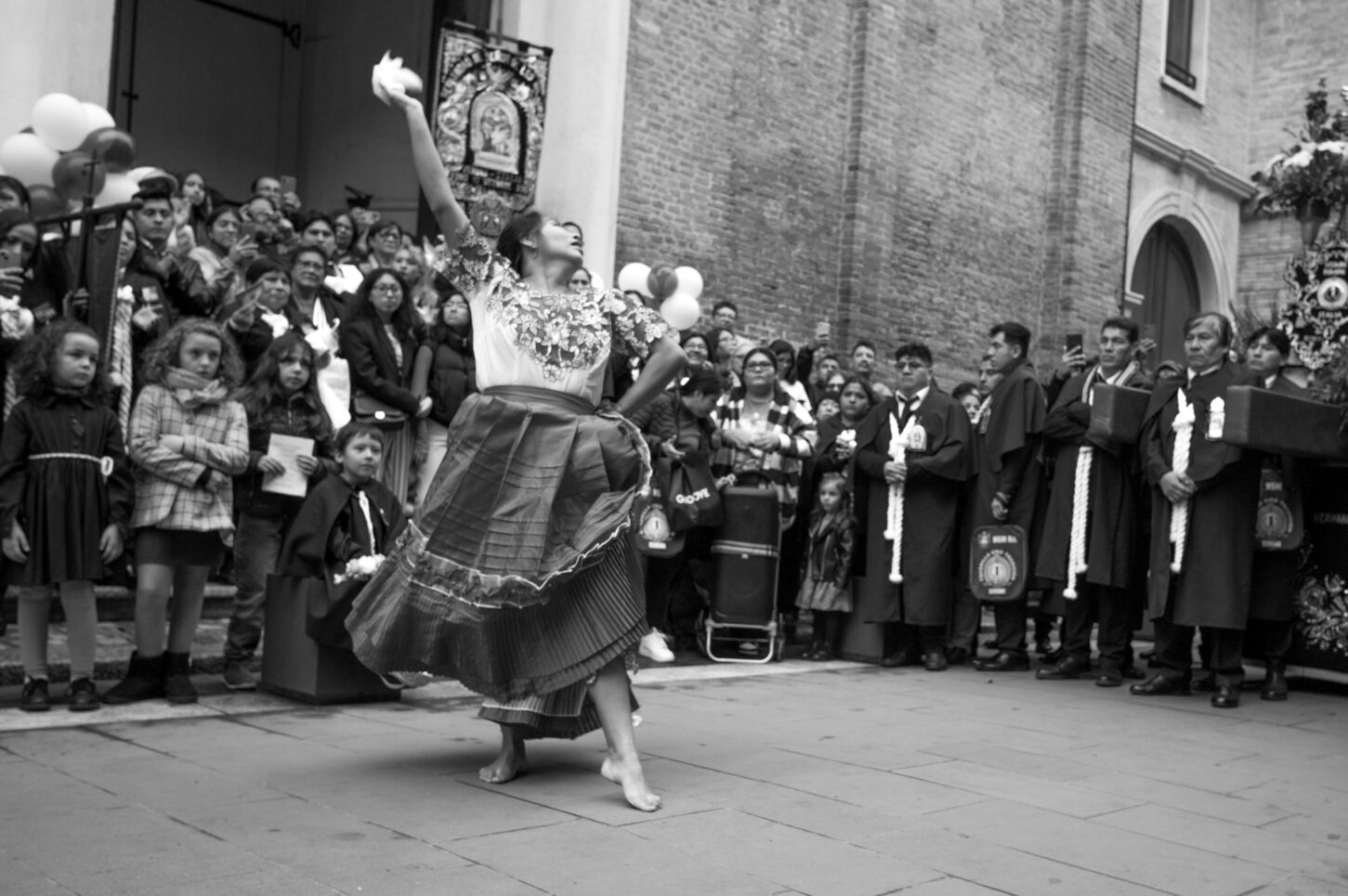
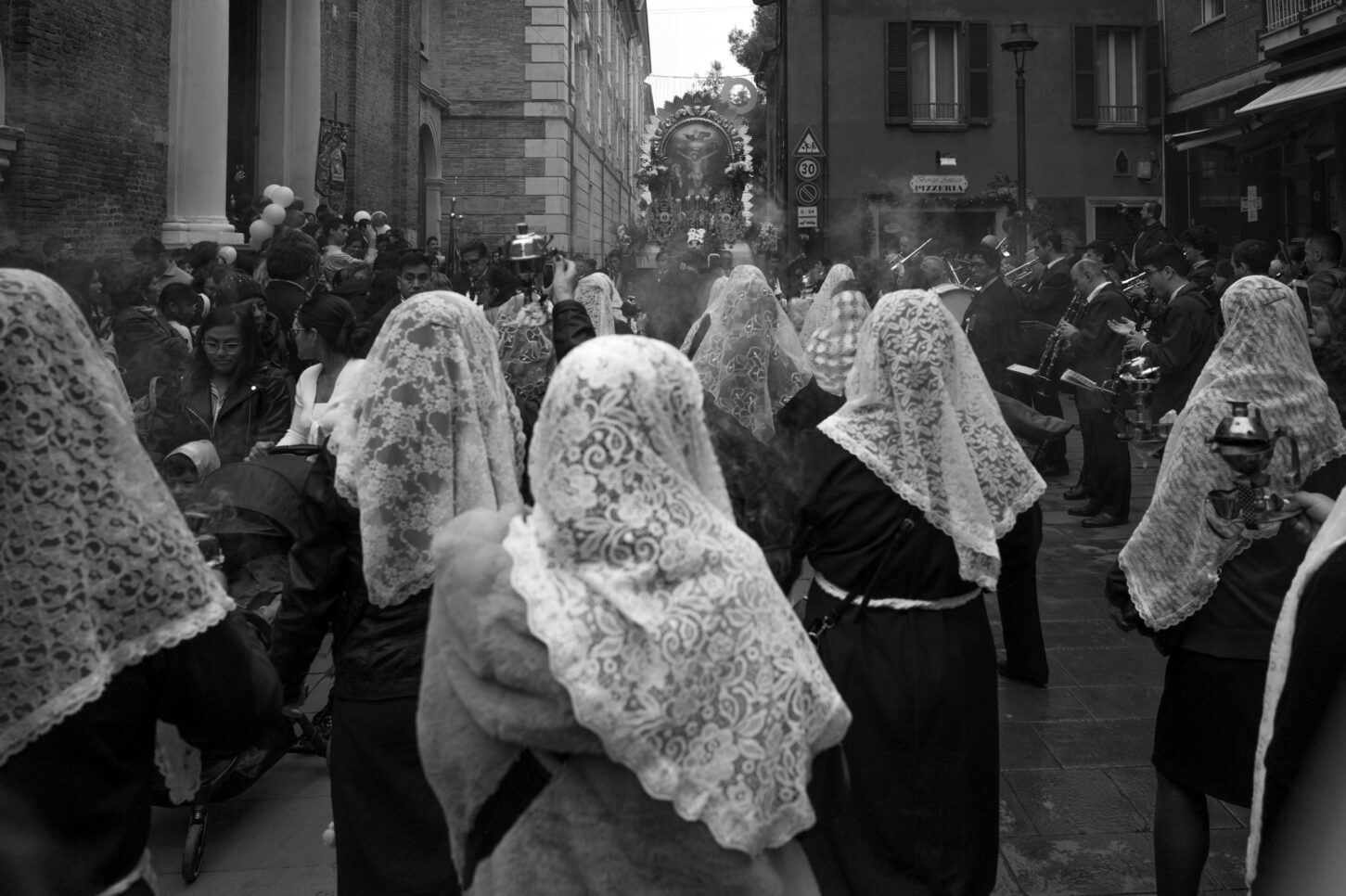
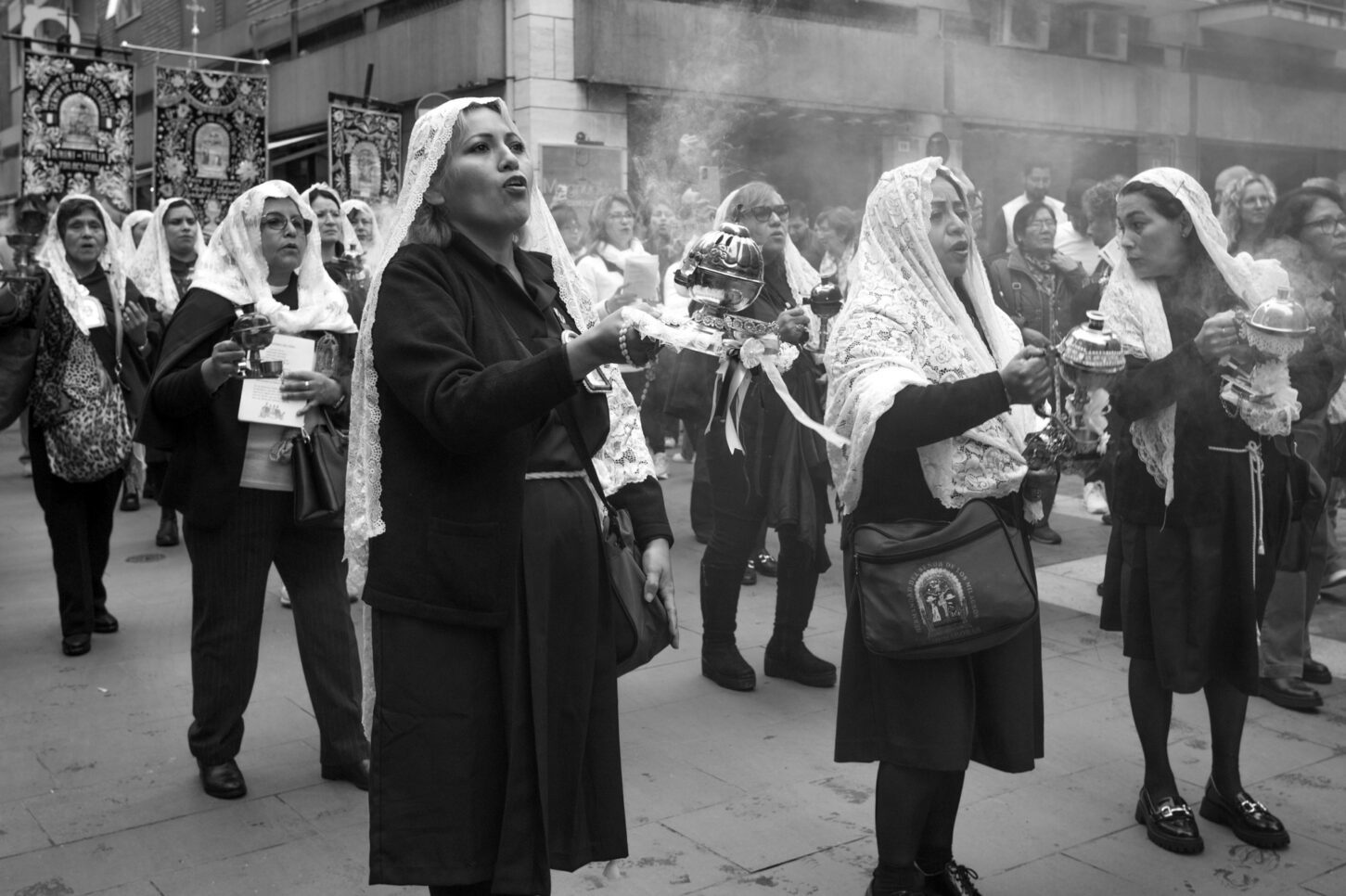
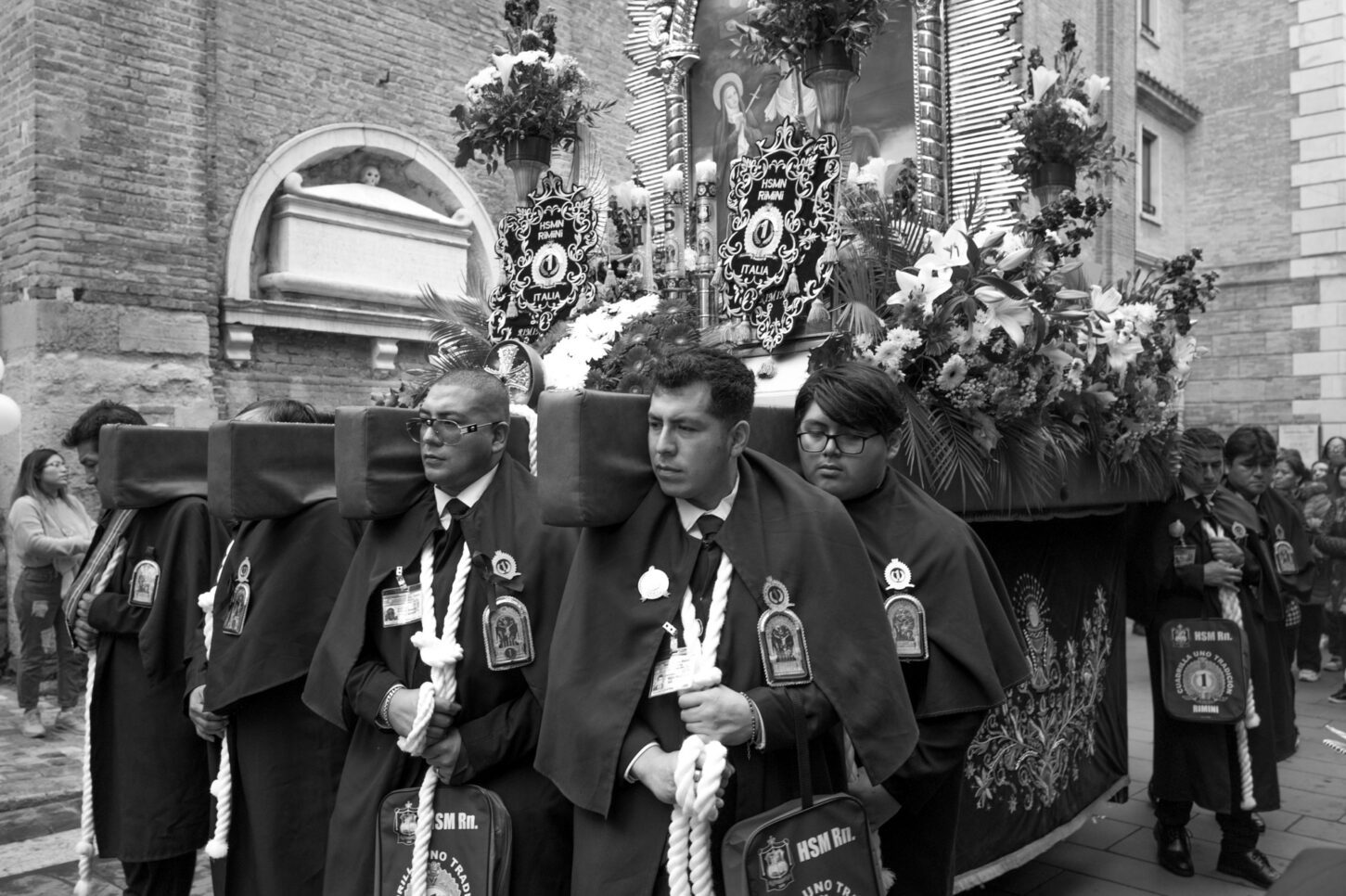
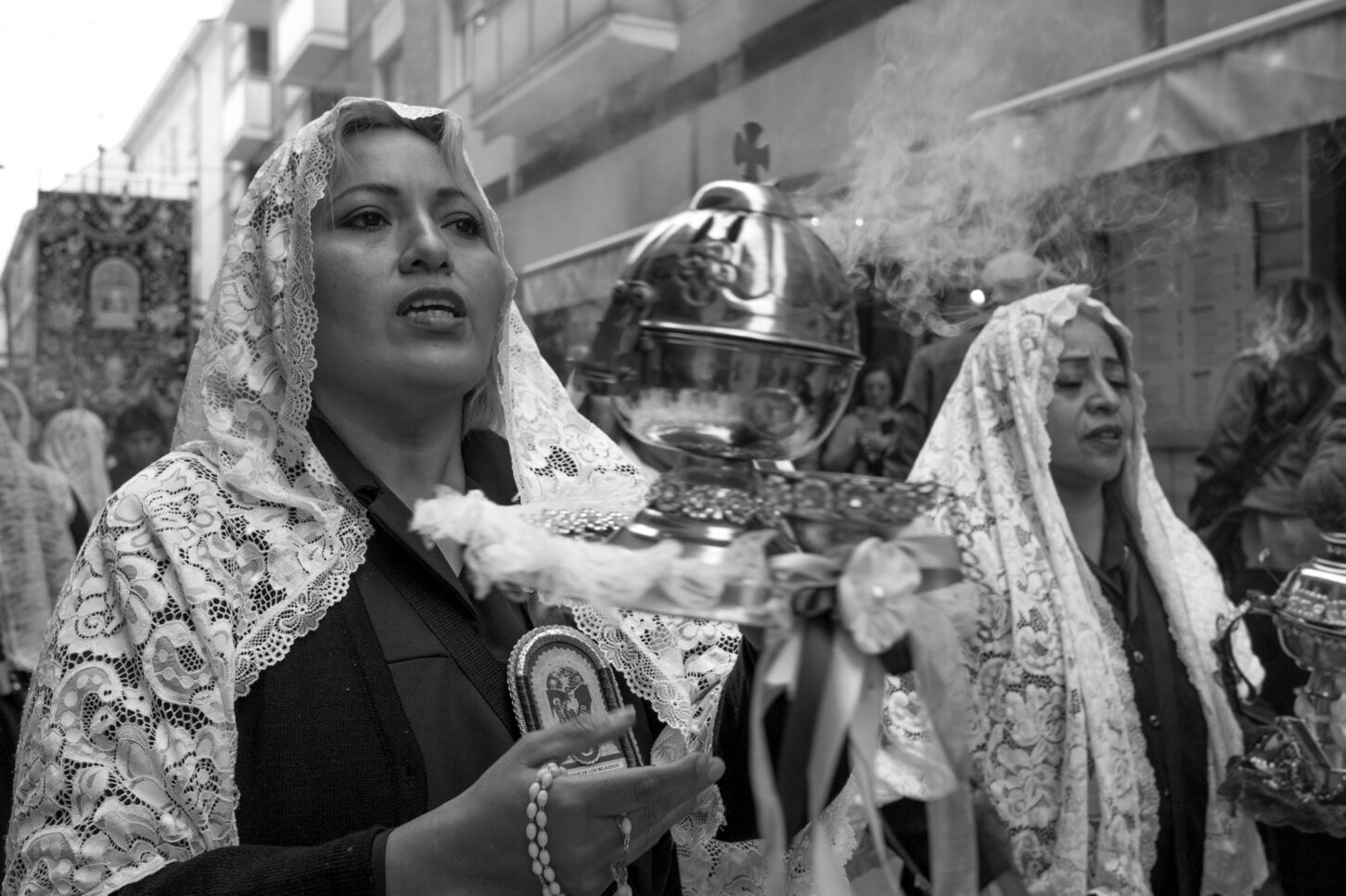
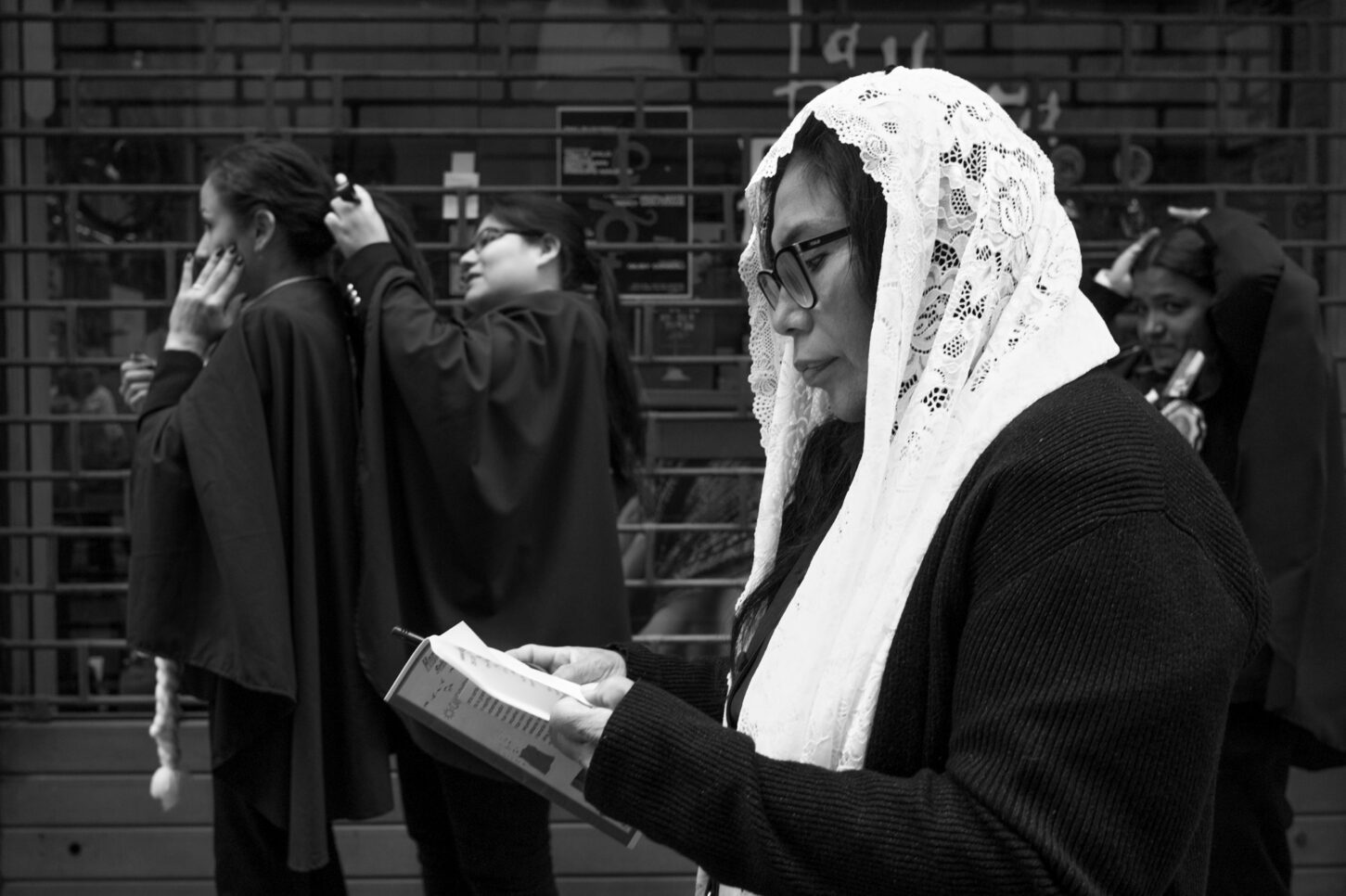
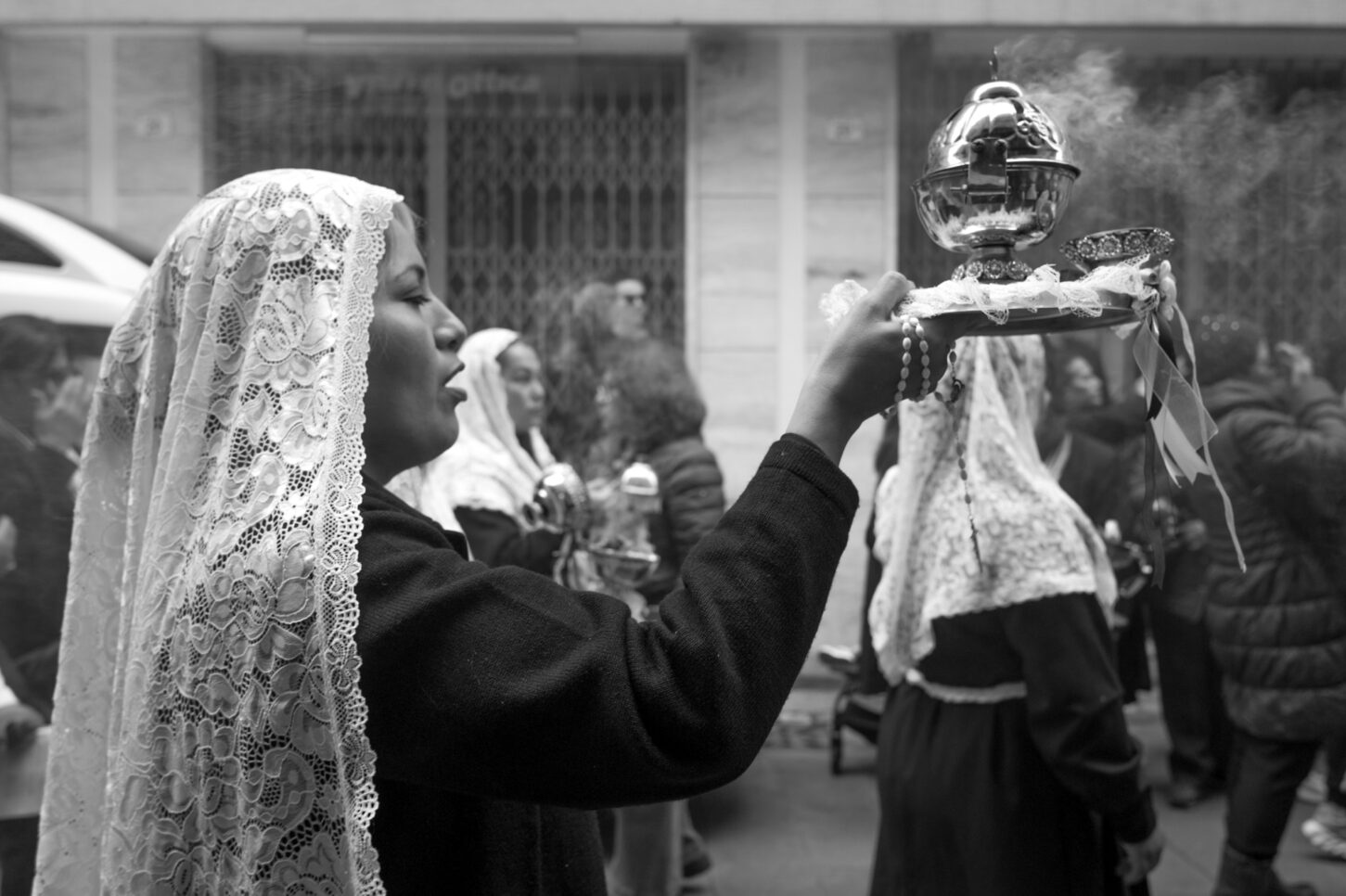
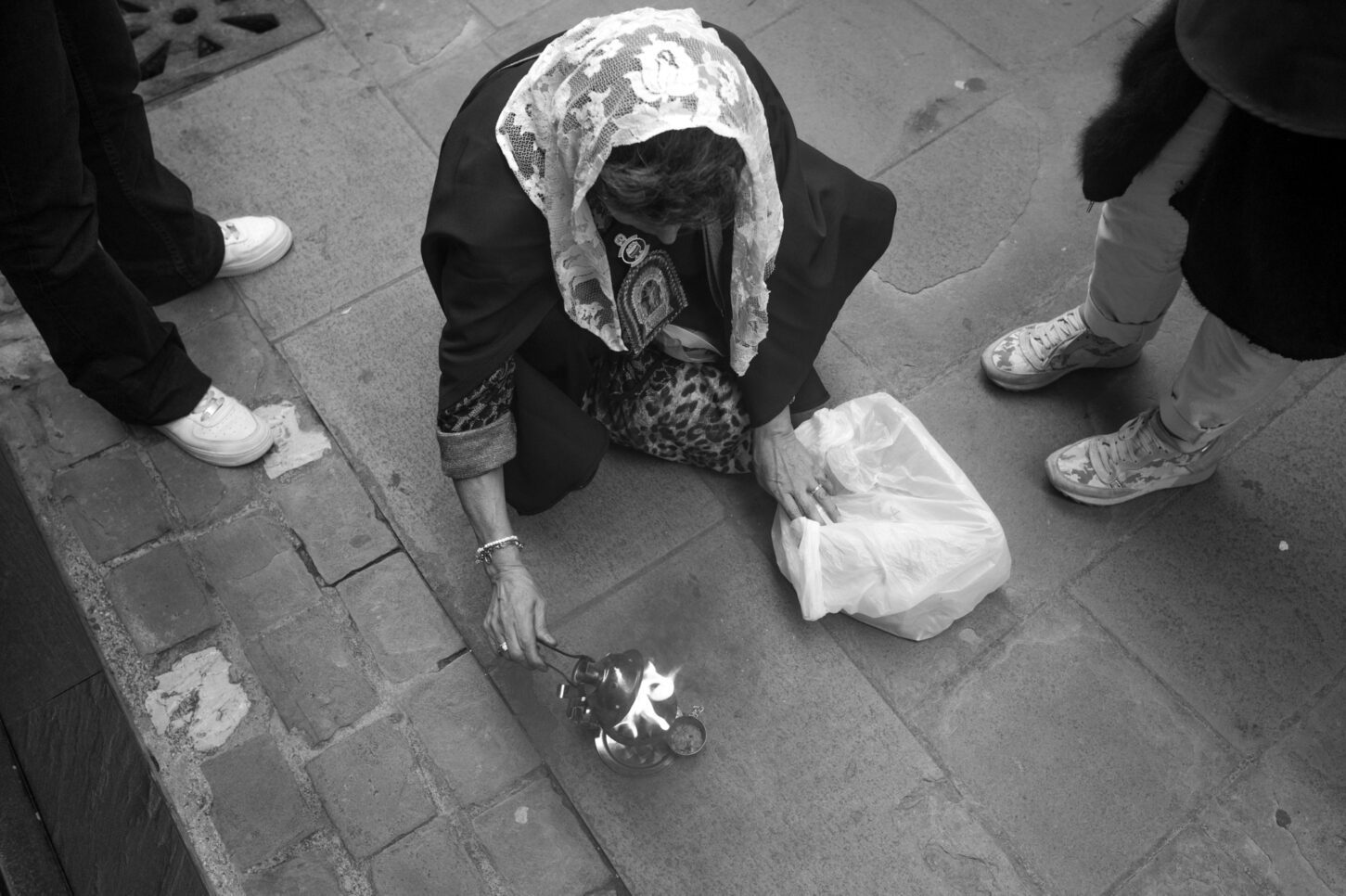
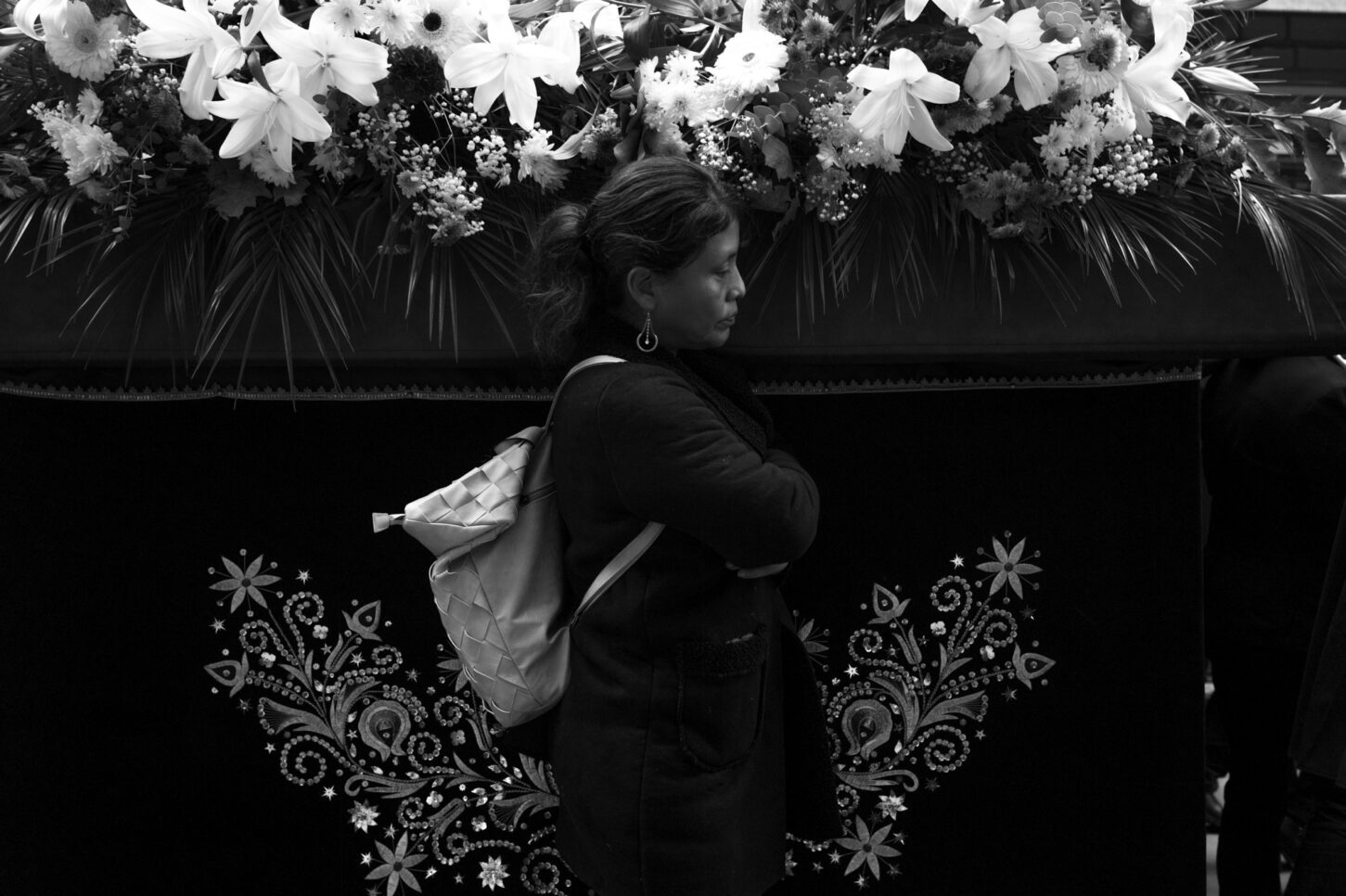
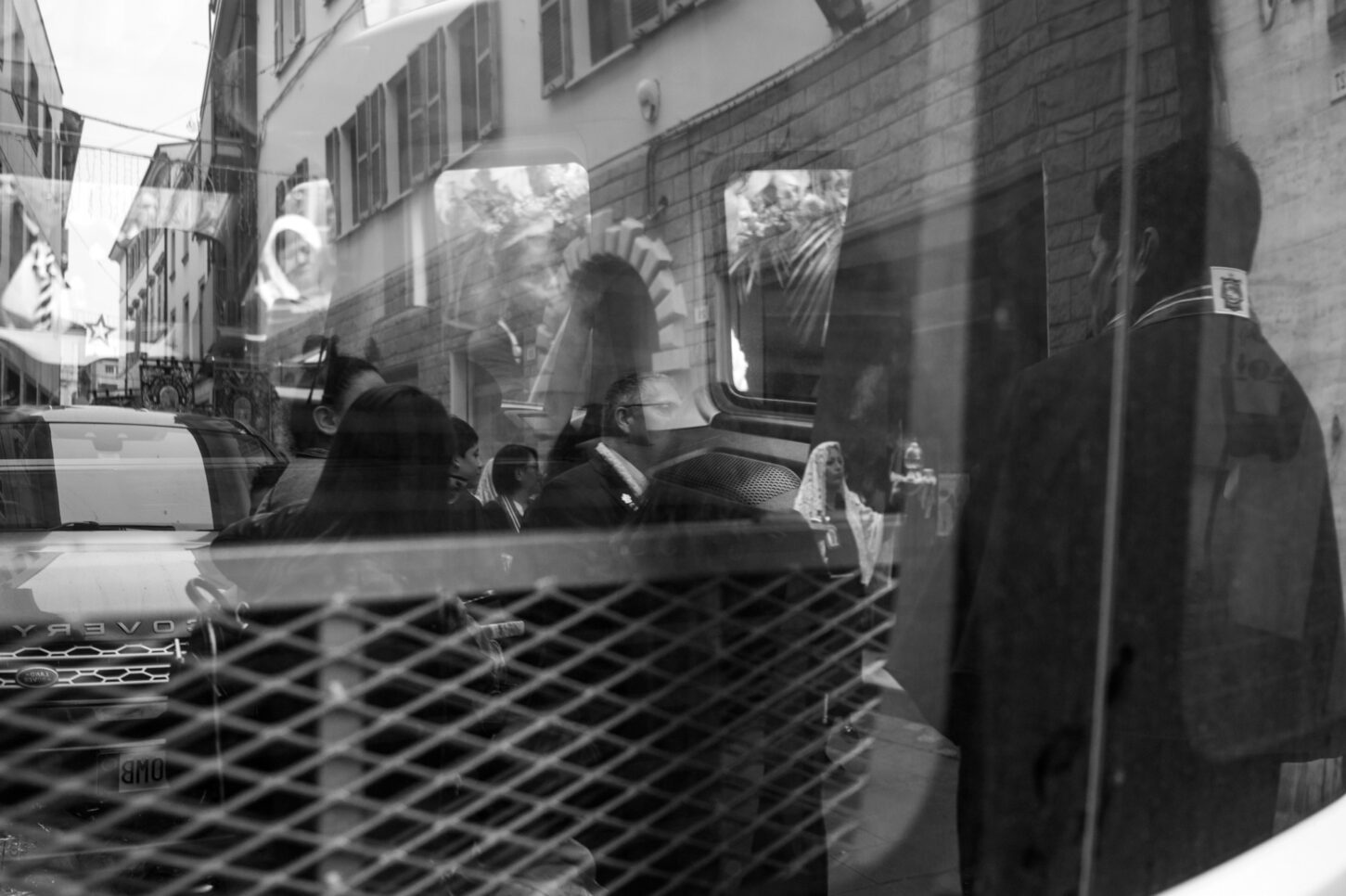
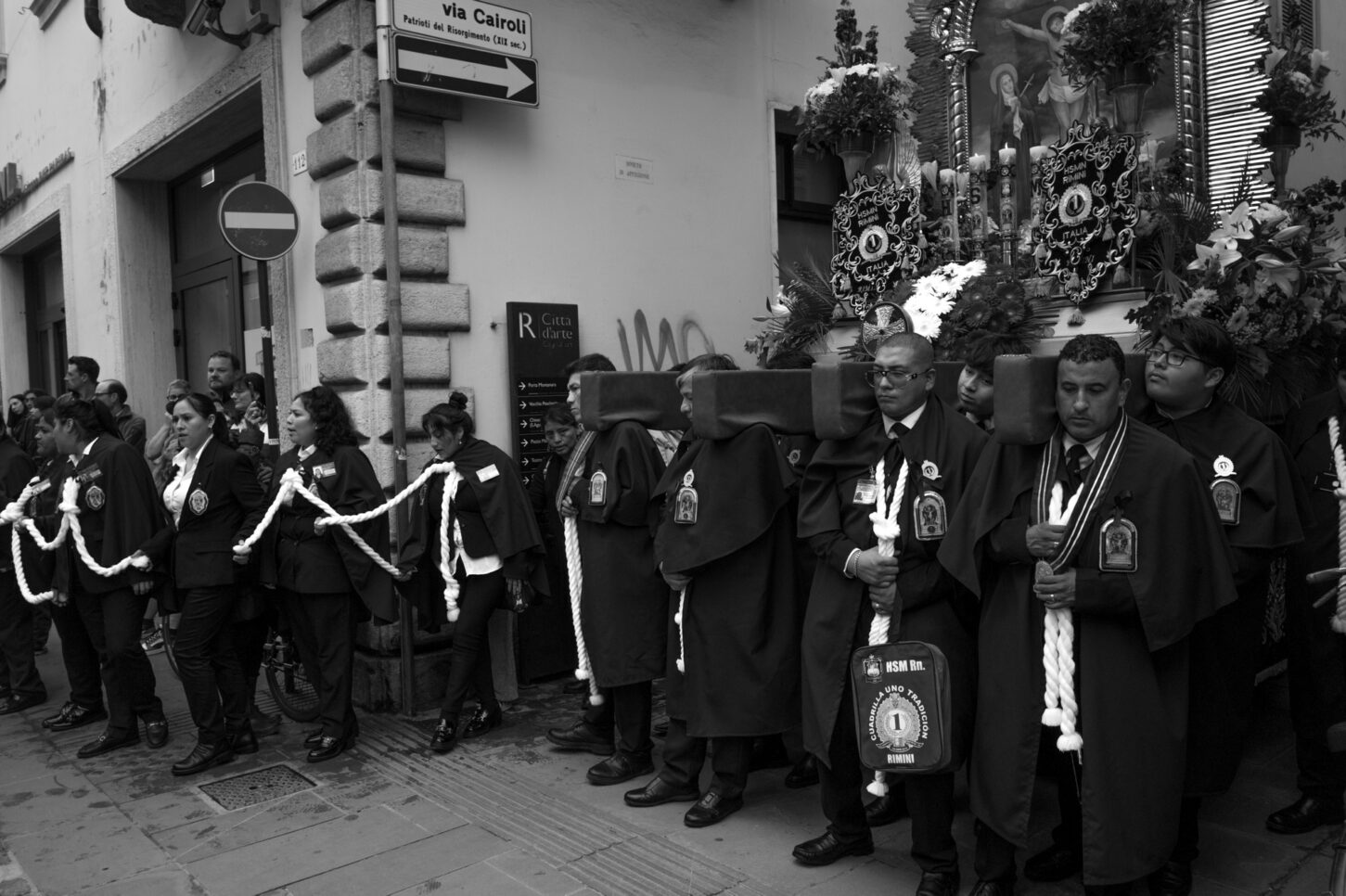
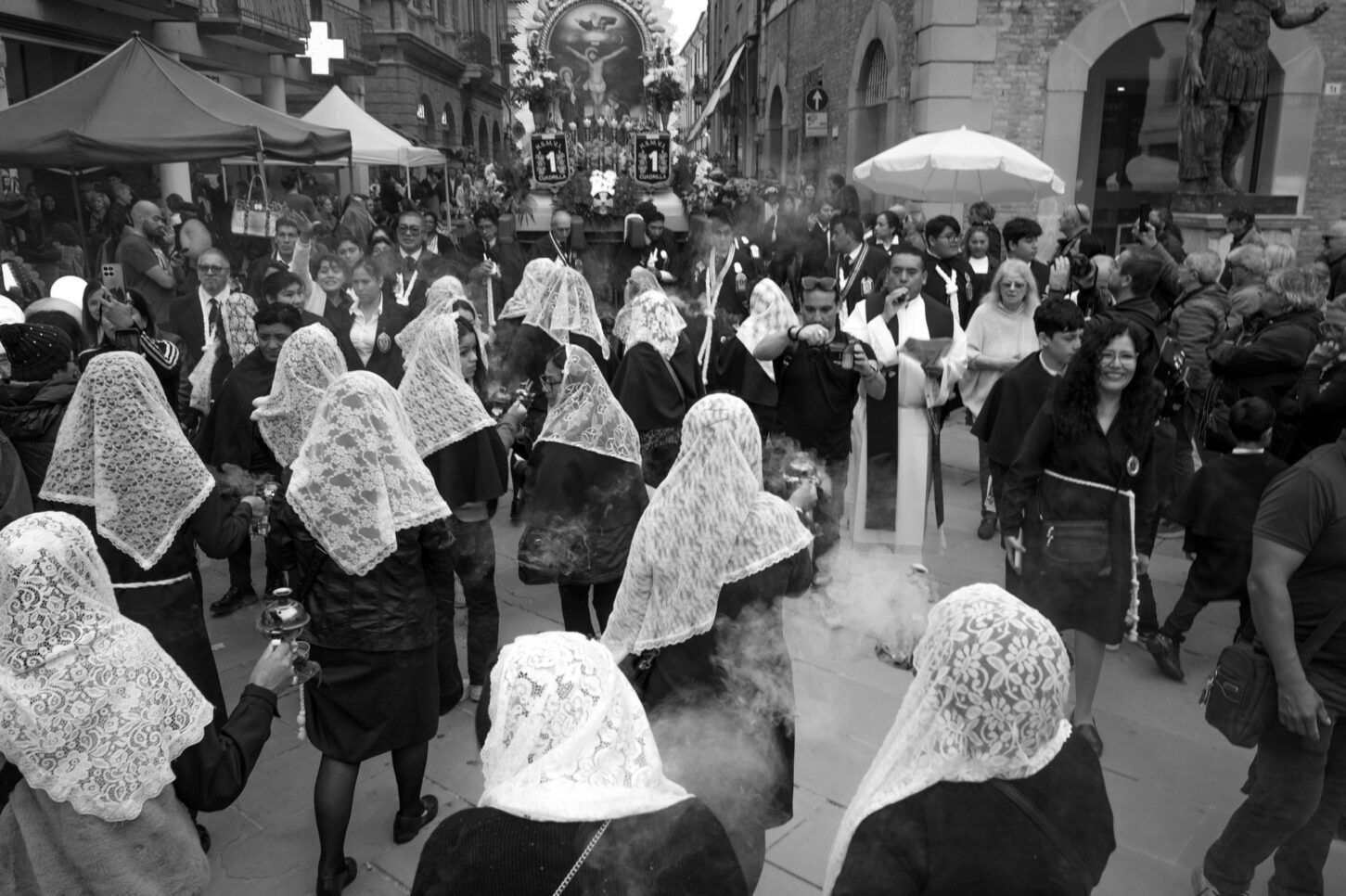
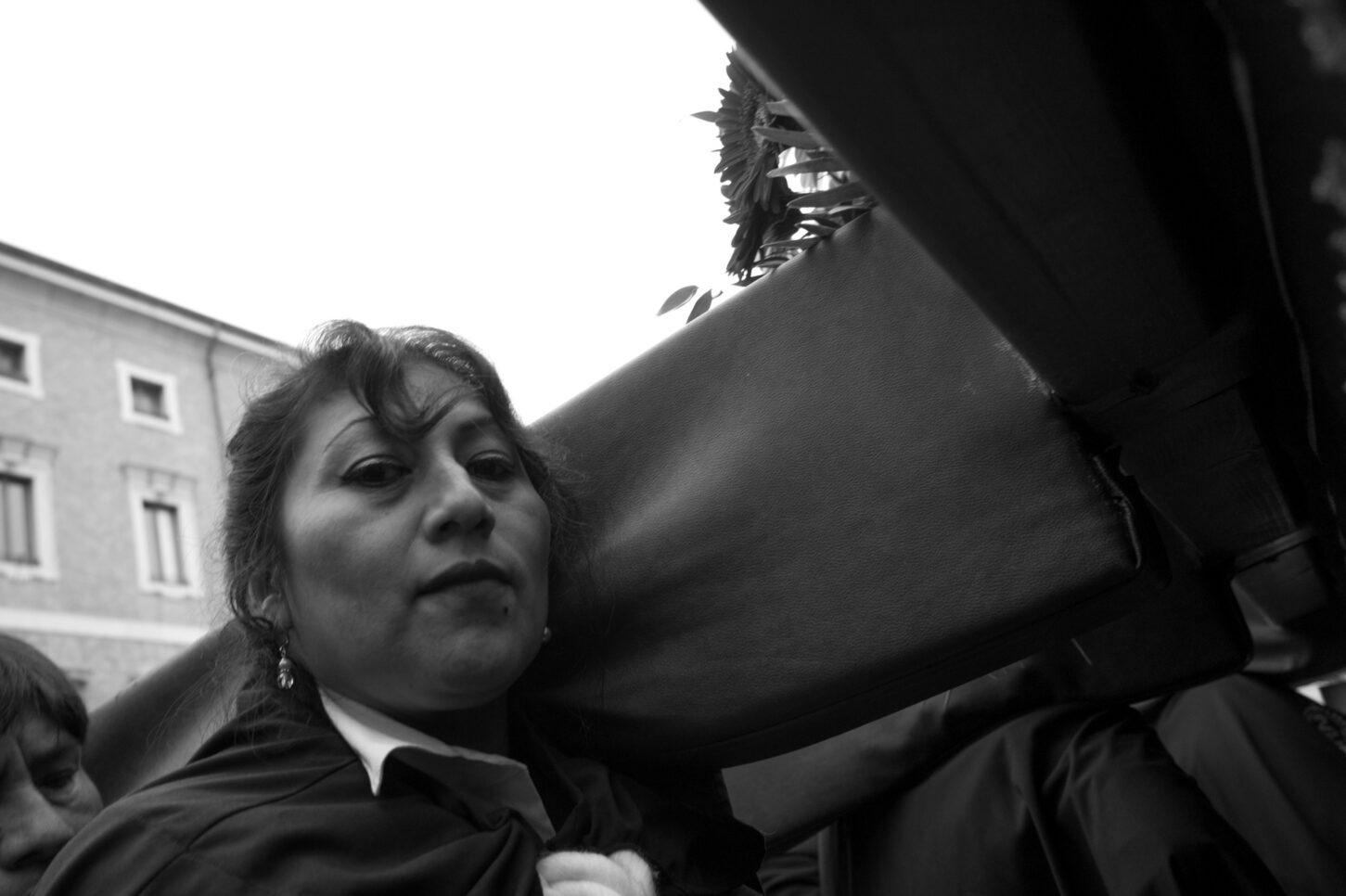
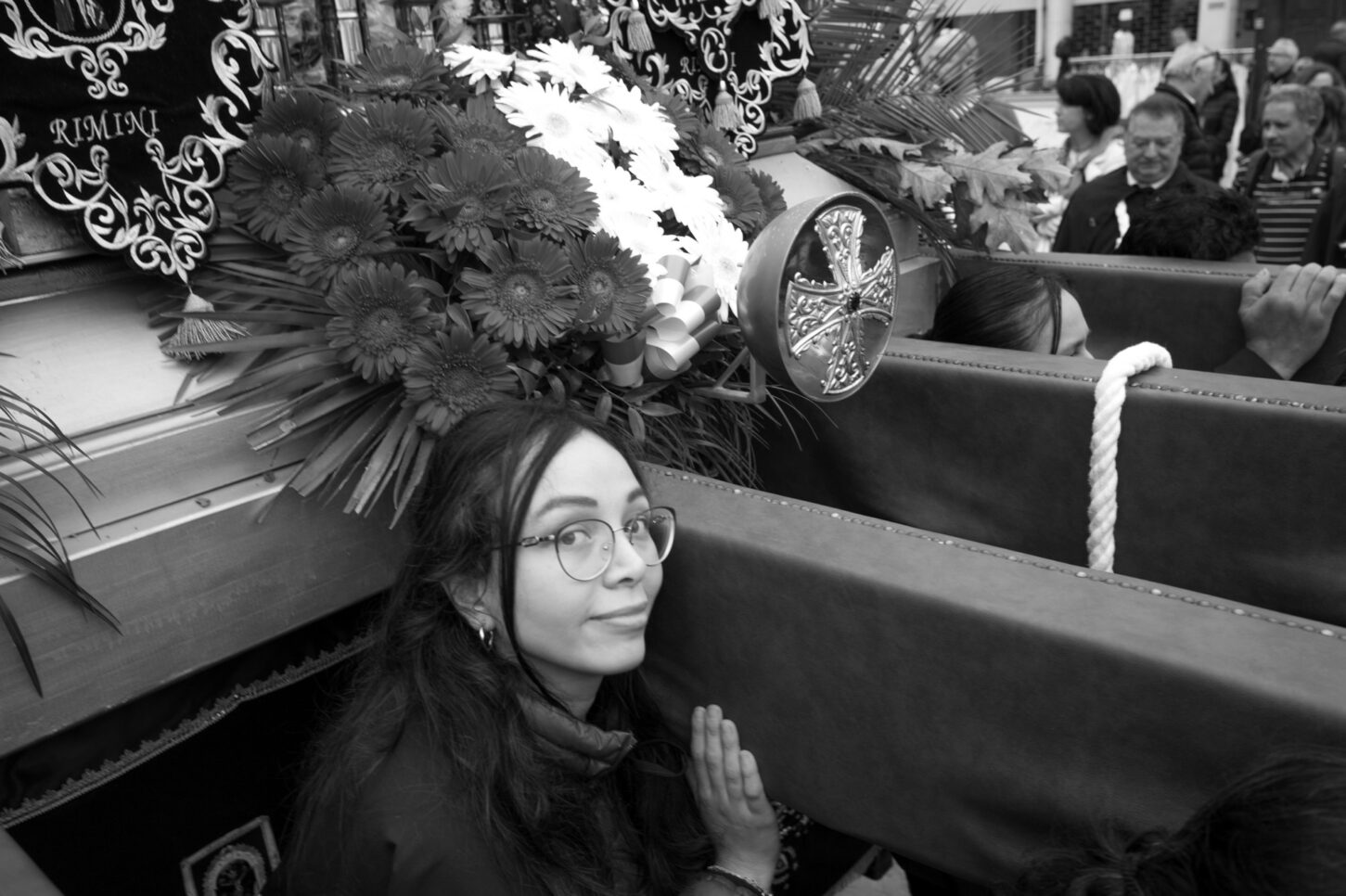
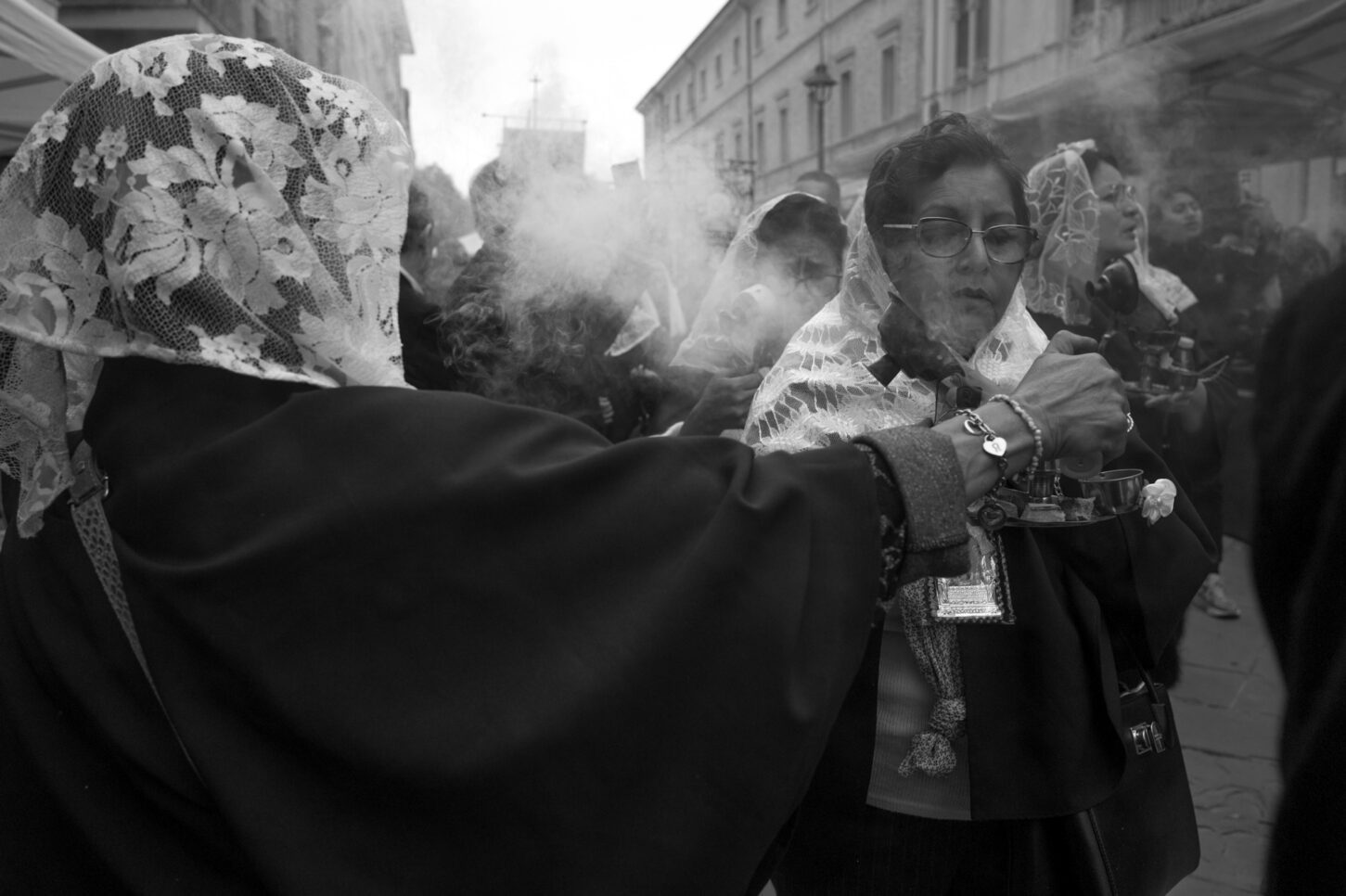
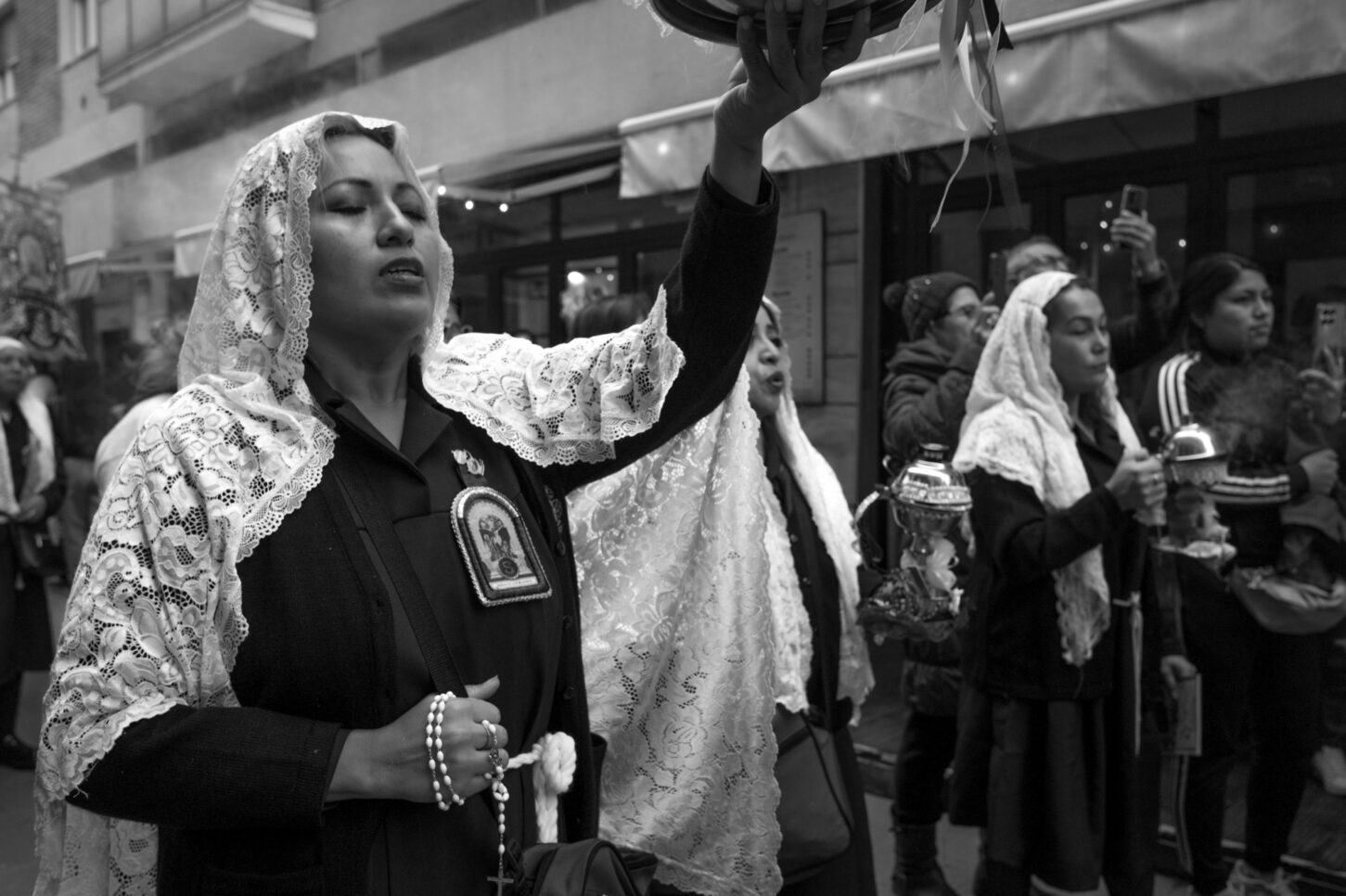
The procession of the Señor de los Milagros in Rimini brings one of Peru’s most important Catholic devotions into the streets of an Italian seaside city. In October, the image of the Cristo Morado — the Purple Christ, also known as the Christ of Pachacamilla — moves slowly among candles, flowers, incense, music, prayers, and the purple garments worn by devotees.
For the Peruvian community, this walk carries a geography larger than the route itself. Lima is present in gestures, songs, food, family memories, and the careful way people gather around the image. Rimini becomes a place where distance is reduced for a few hours. Faith makes room for language, childhood, absence, and the need to remain connected to a country left behind but still alive in the body.
The devotion began in seventeenth-century Lima, in the neighborhood of Pachacamilla, where Afro-Peruvian communities lived at the edge of the colonial city. Around 1650 or 1651, an anonymous Black man, often described in later tradition as Angolan, painted Christ crucified on an adobe wall. The image was simple: Christ on the cross, placed in a place of prayer used by people living under enslavement, exclusion, and precarious protection.
In 1655, a powerful earthquake struck Lima and destroyed much of the city. The wall with the painted Christ remained standing. The event entered popular devotion as a miracle. The image became a sign of protection for people who had little power in the official order of the city. What began within a marginalized community slowly moved outward, drawing more believers and becoming part of Lima’s religious life.
Another earthquake, in 1687, deepened the devotion. A copy of the image was carried through the streets in procession that October. From that moment, the Señor de los Milagros became tied to public walking, collective prayer, and the city itself. By the eighteenth century, the procession had become one of Lima’s most important religious events. Today, every October, thousands of devotees in Peru accompany the image through the streets, many dressed in purple as a sign of faith, penance, and belonging.
The history matters because the Señor de los Milagros grew from a specific social ground. It came from a wall painted in a poor district, among Black and Indigenous people living inside the violence of colonial Peru. Over time, the image crossed class boundaries and became a national symbol, but its origins remain tied to those who first prayed before it: people whose lives were marked by labor, displacement, and survival.
In Rimini, this history takes another form
The procession belongs to people who have built lives far from Peru while keeping a ritual calendar alive. Children watch the adults move with the image. Elders recognize songs and colors from another city. Families walk together. The street becomes a temporary map of return.
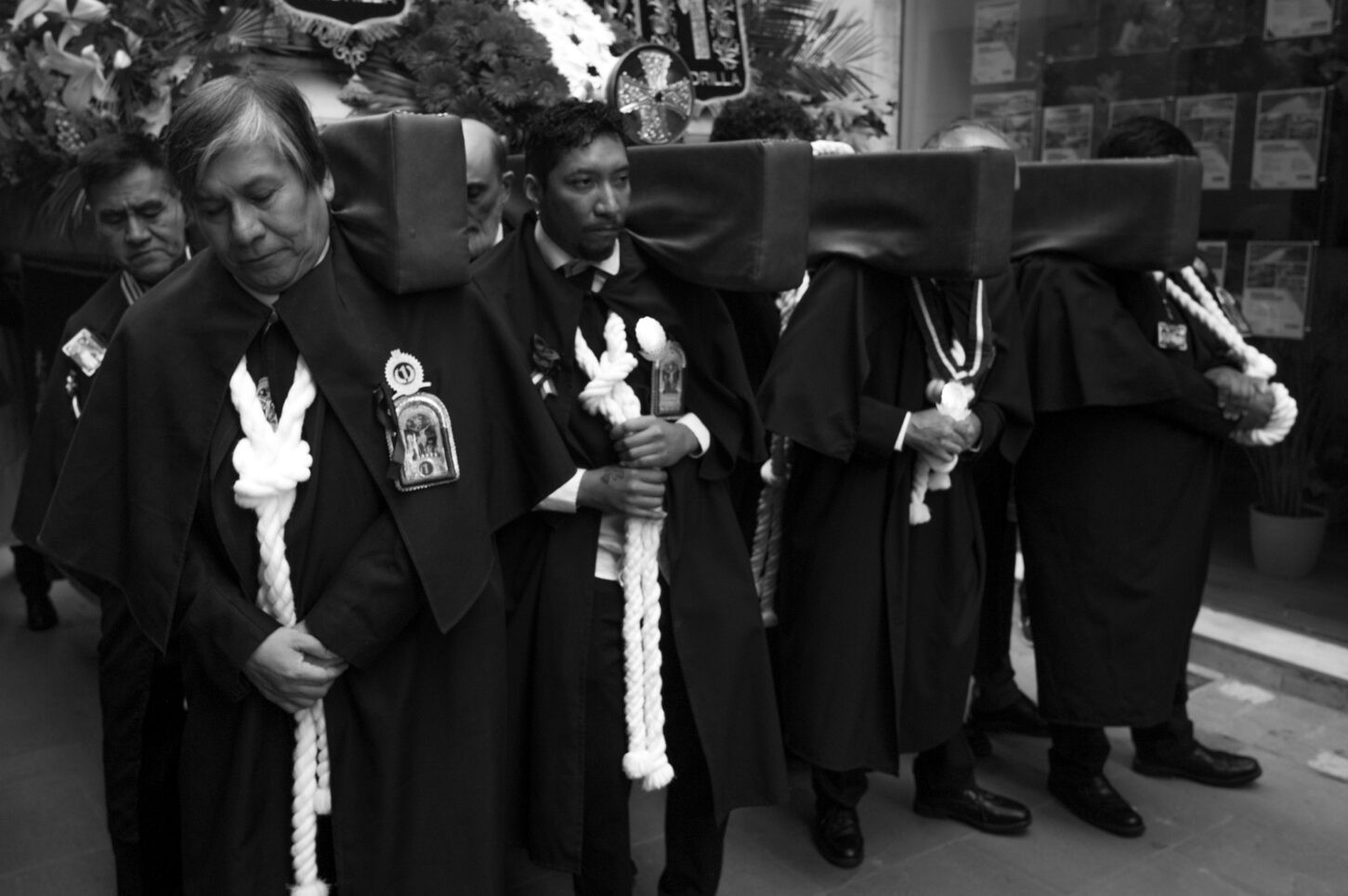
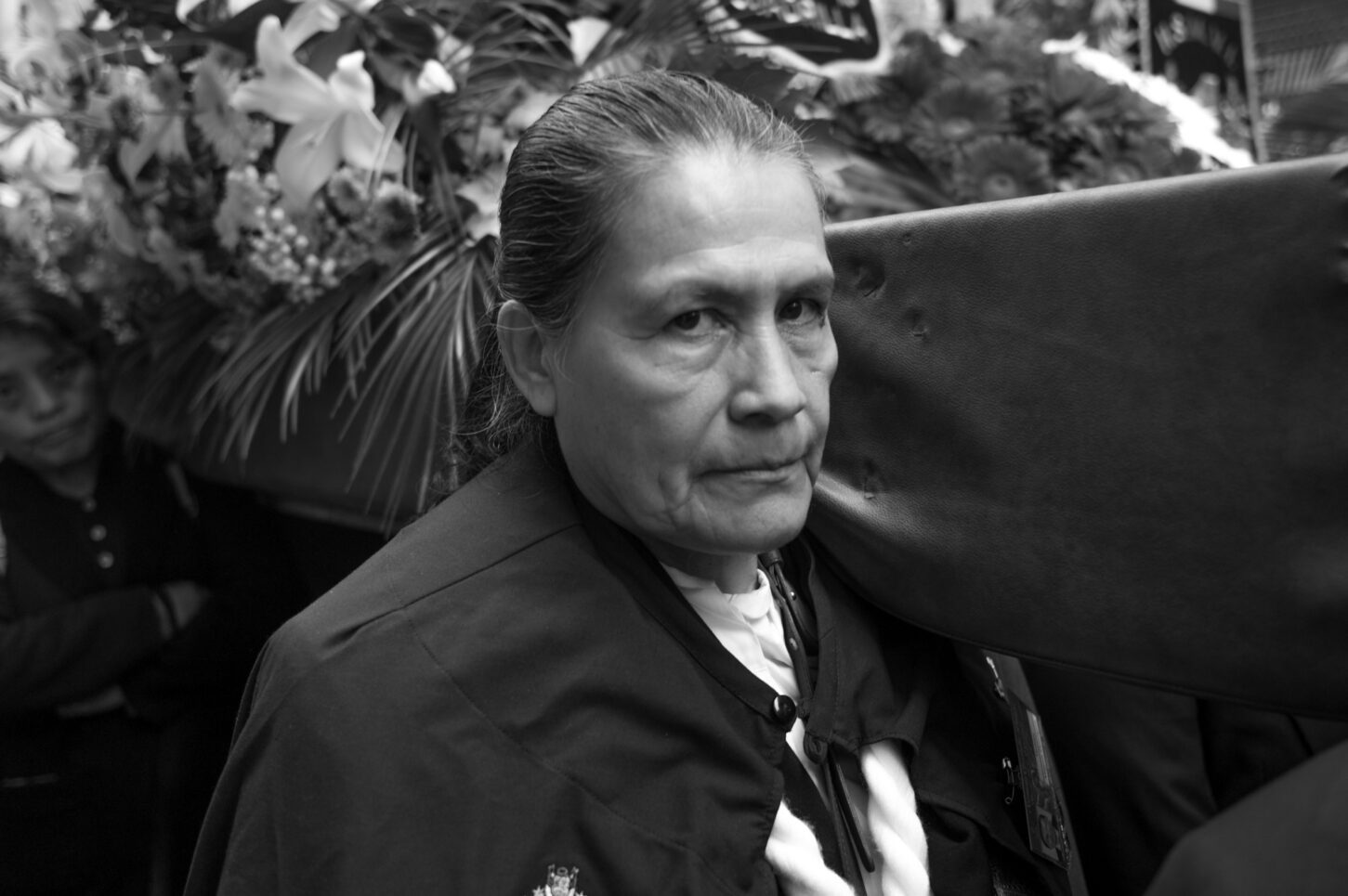
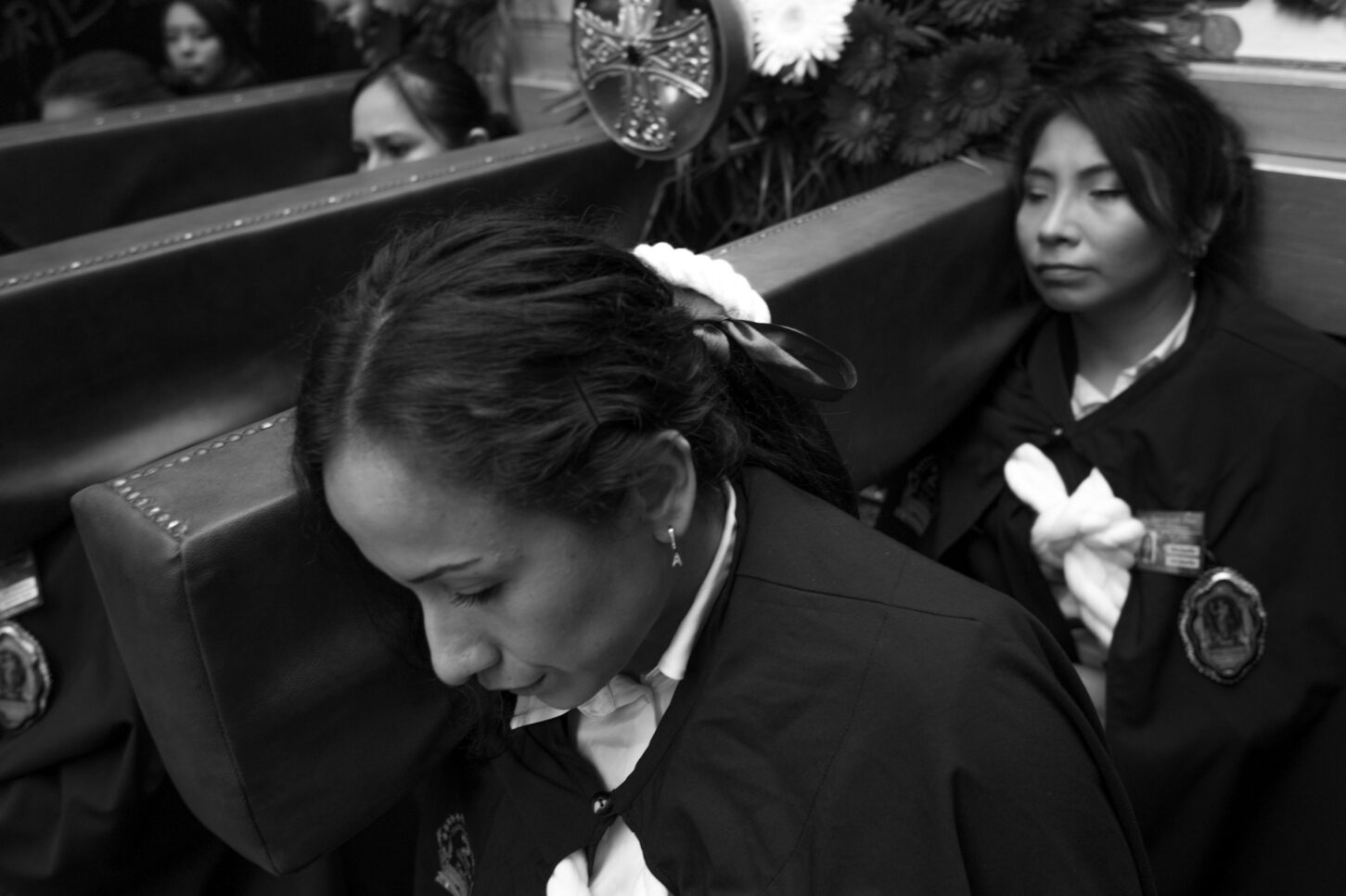
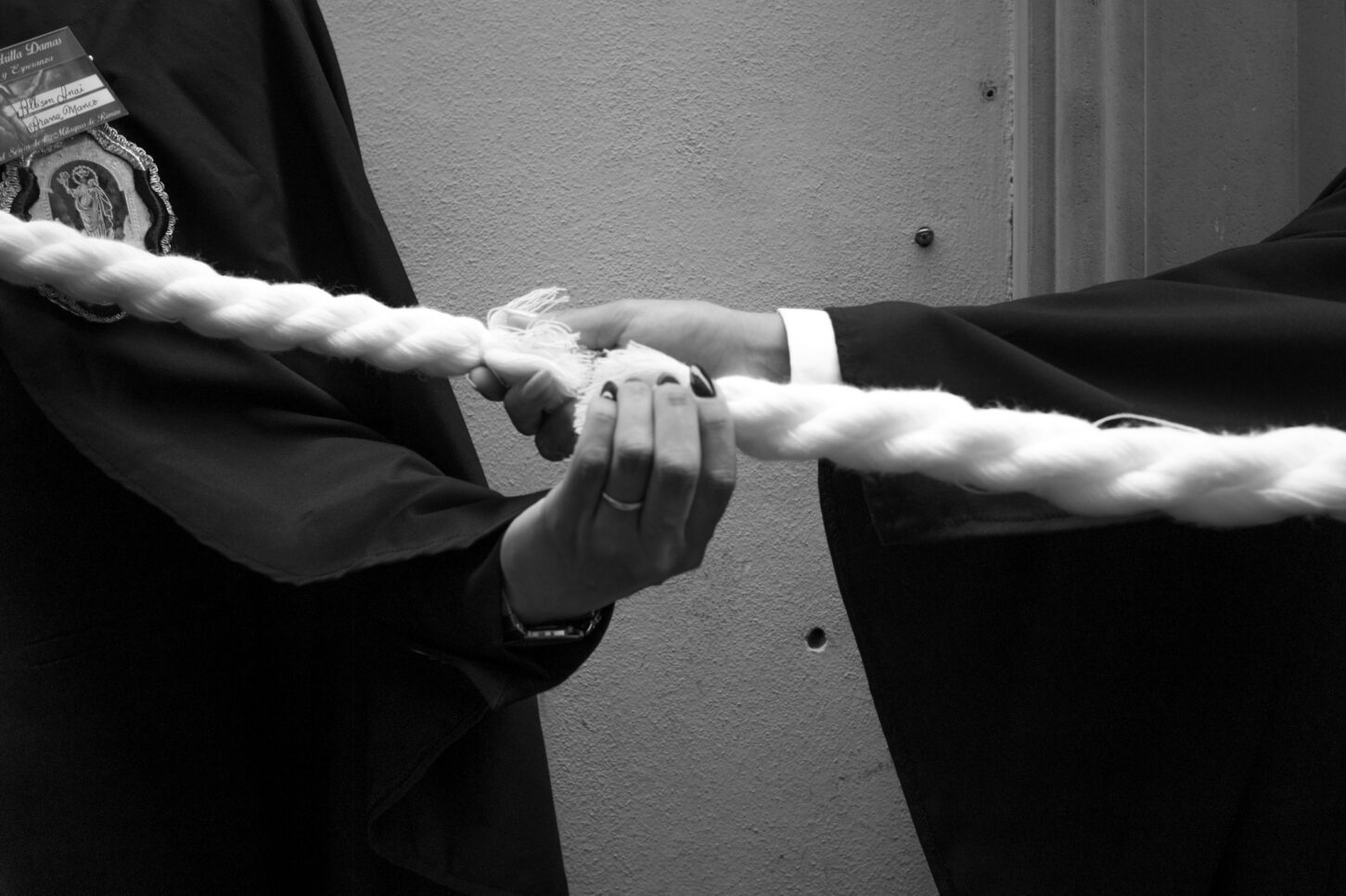
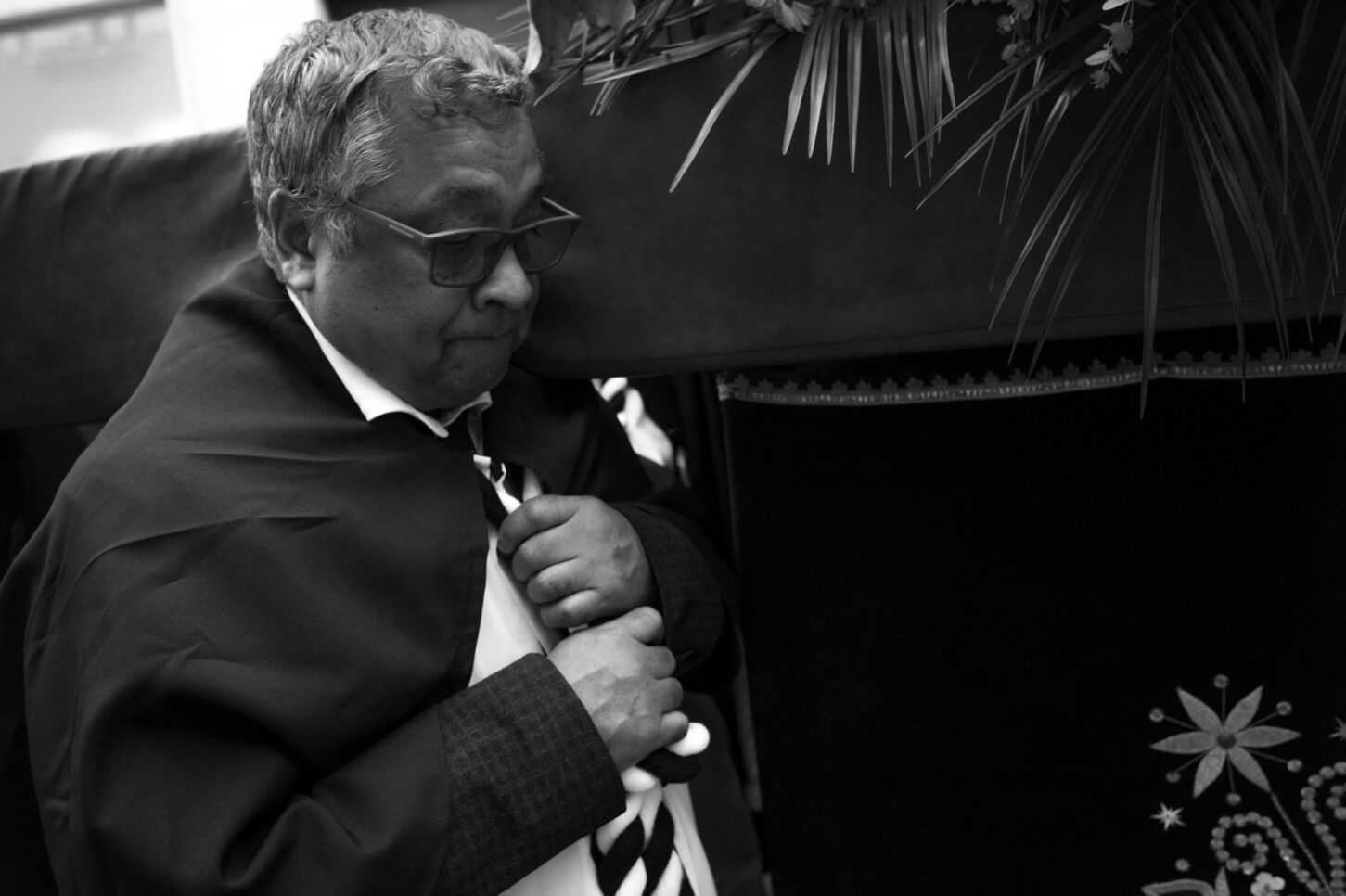
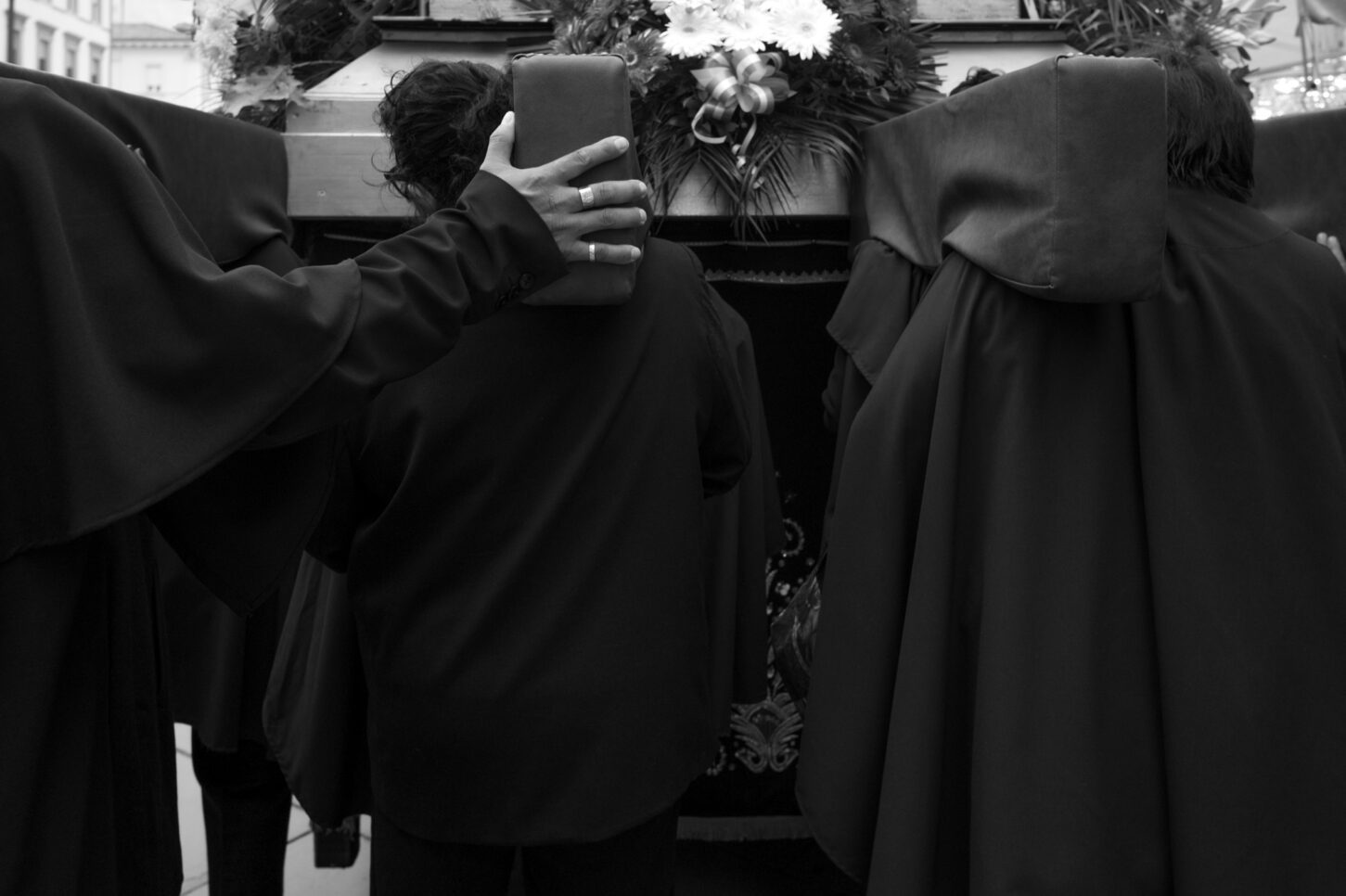
Ayzoh! approaches this gathering through the life of the community rather than through spectacle. The important elements are often quiet: the hands that lift the anda, the women arranging flowers, the musicians preparing, the children learning when to stand still, the faces turned toward the image, the small conversations before and after the procession.
The Señor de los Milagros in Rimini speaks of faith, but also of continuity. It shows how a community preserves memory without freezing it. A devotion born in Lima now moves through Italian streets, carried by migrants and their children, by believers and volunteers, by people who know that belonging can survive distance when it is practiced together.
In the October light, Rimini holds another city inside itself. For a few hours, the Adriatic air carries purple fabric, incense, Spanish prayers, Peruvian songs, and the slow rhythm of a sacred image moving forward. The procession becomes a way to remember where one comes from, and to claim a place in the city where one now lives.