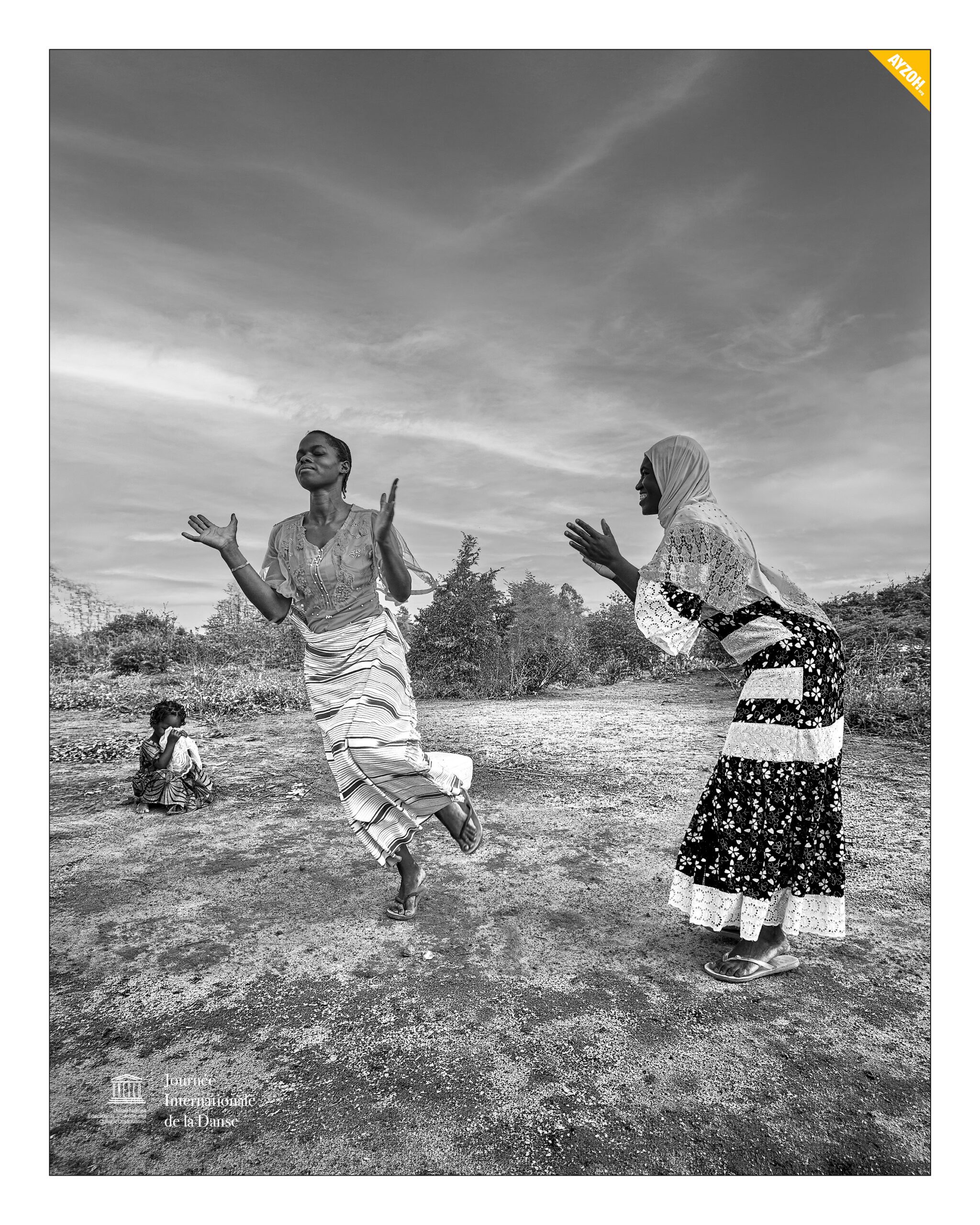
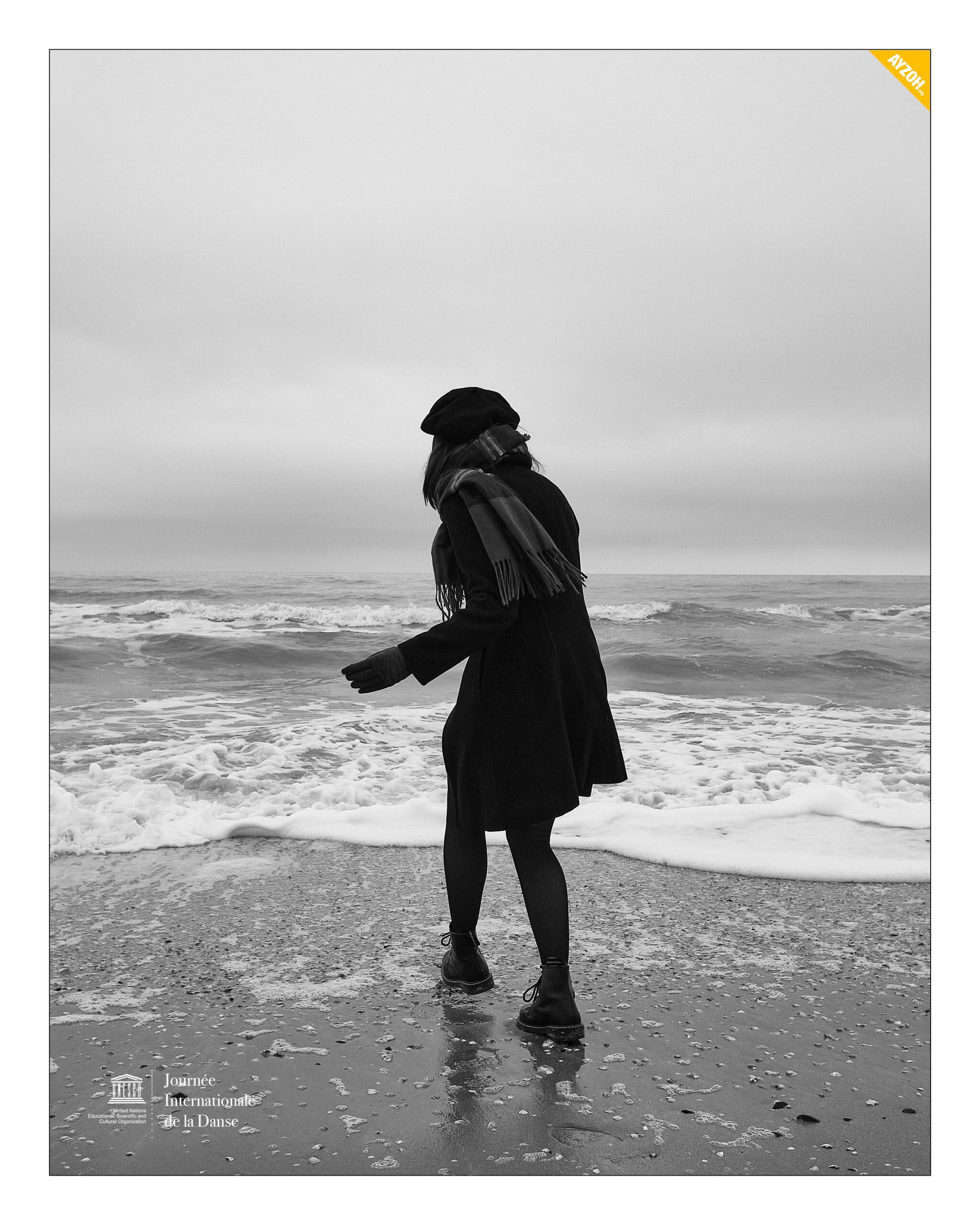
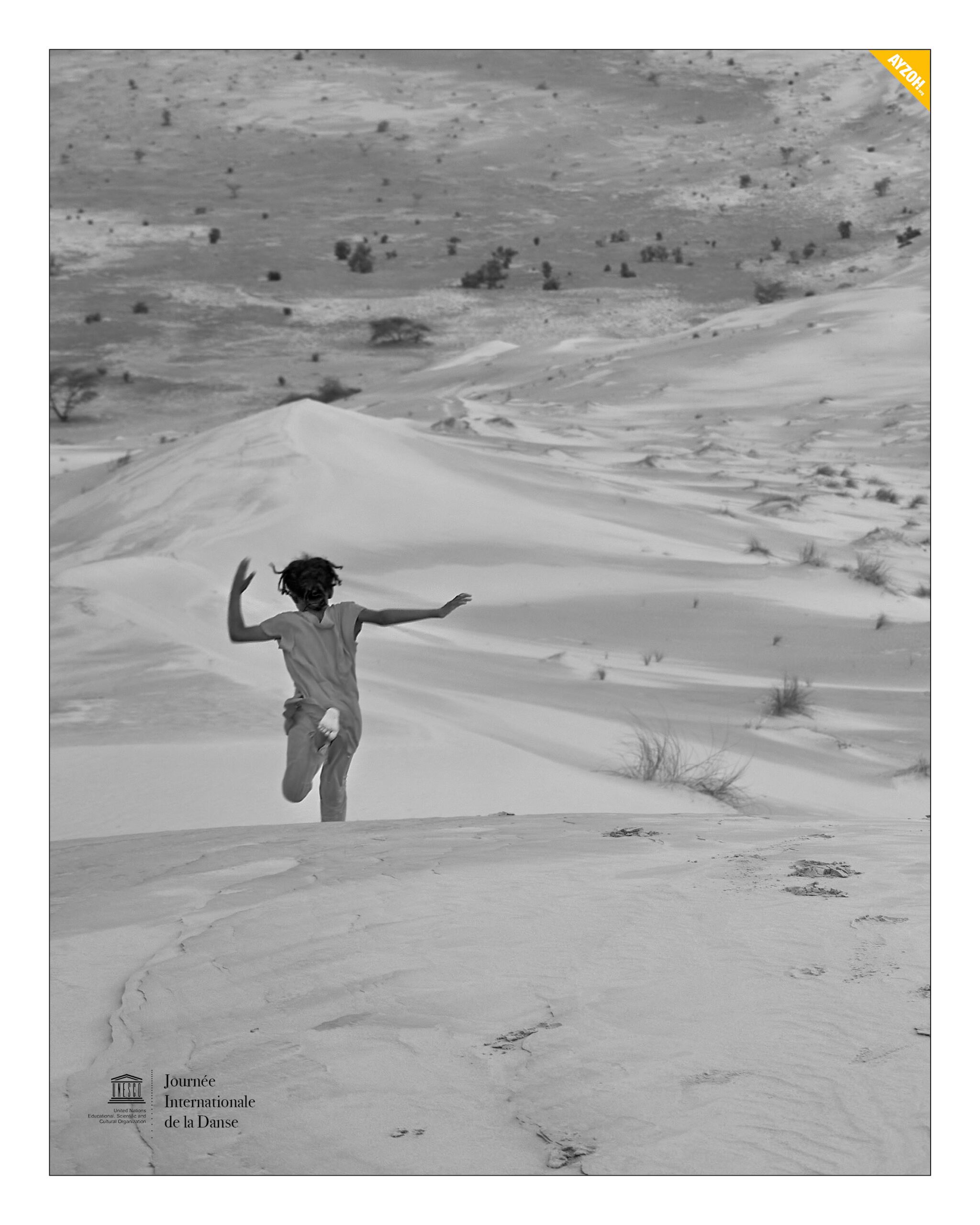
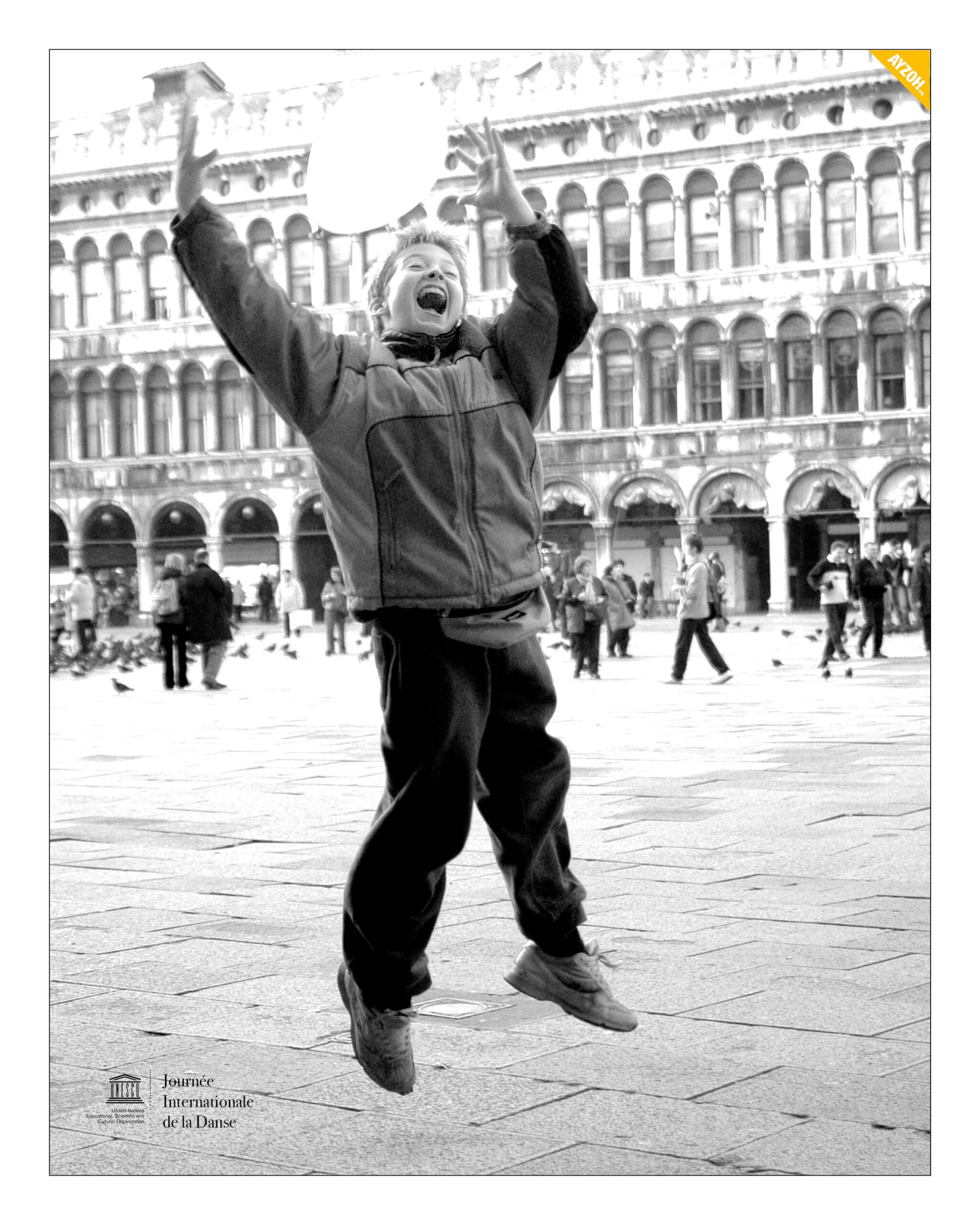
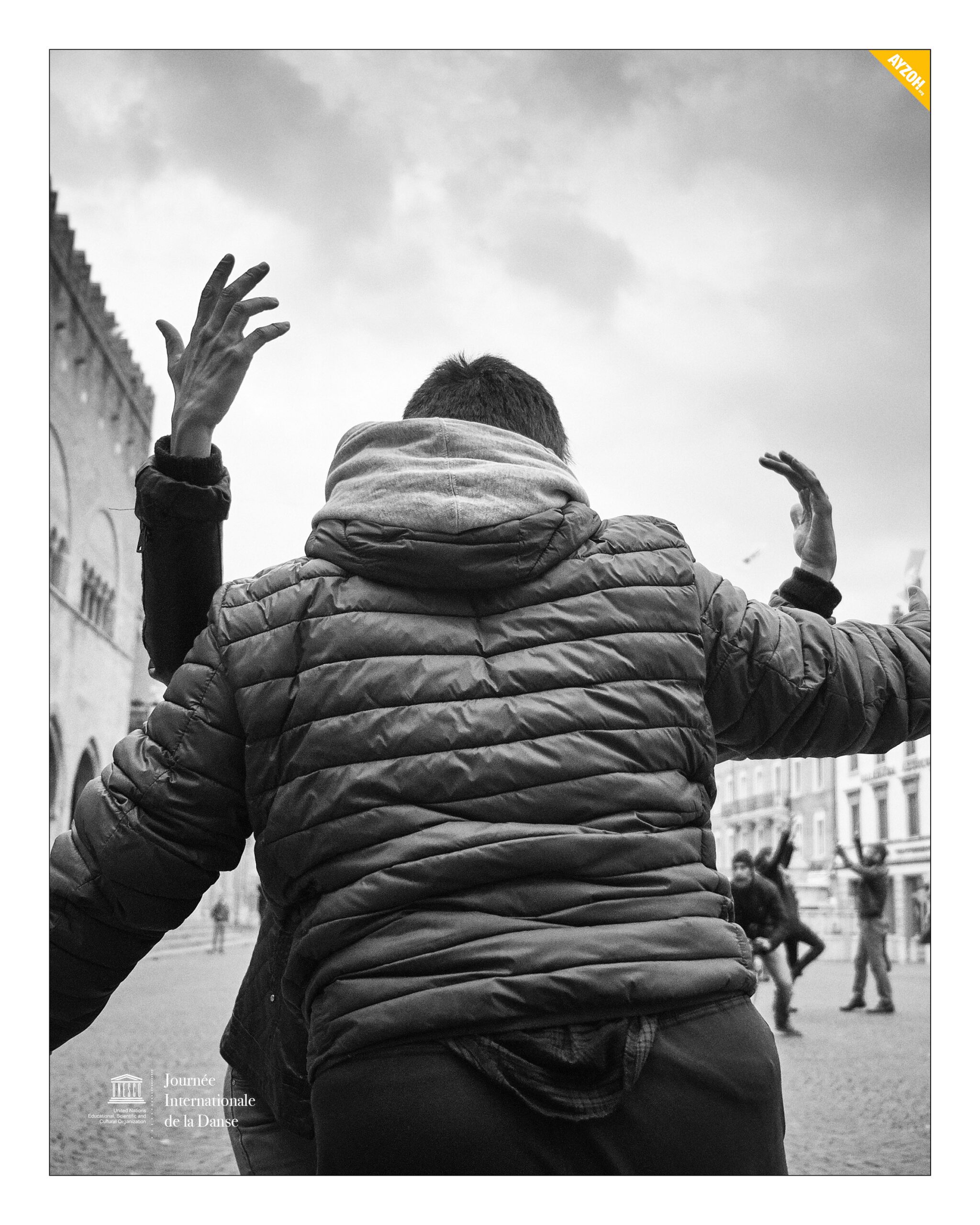
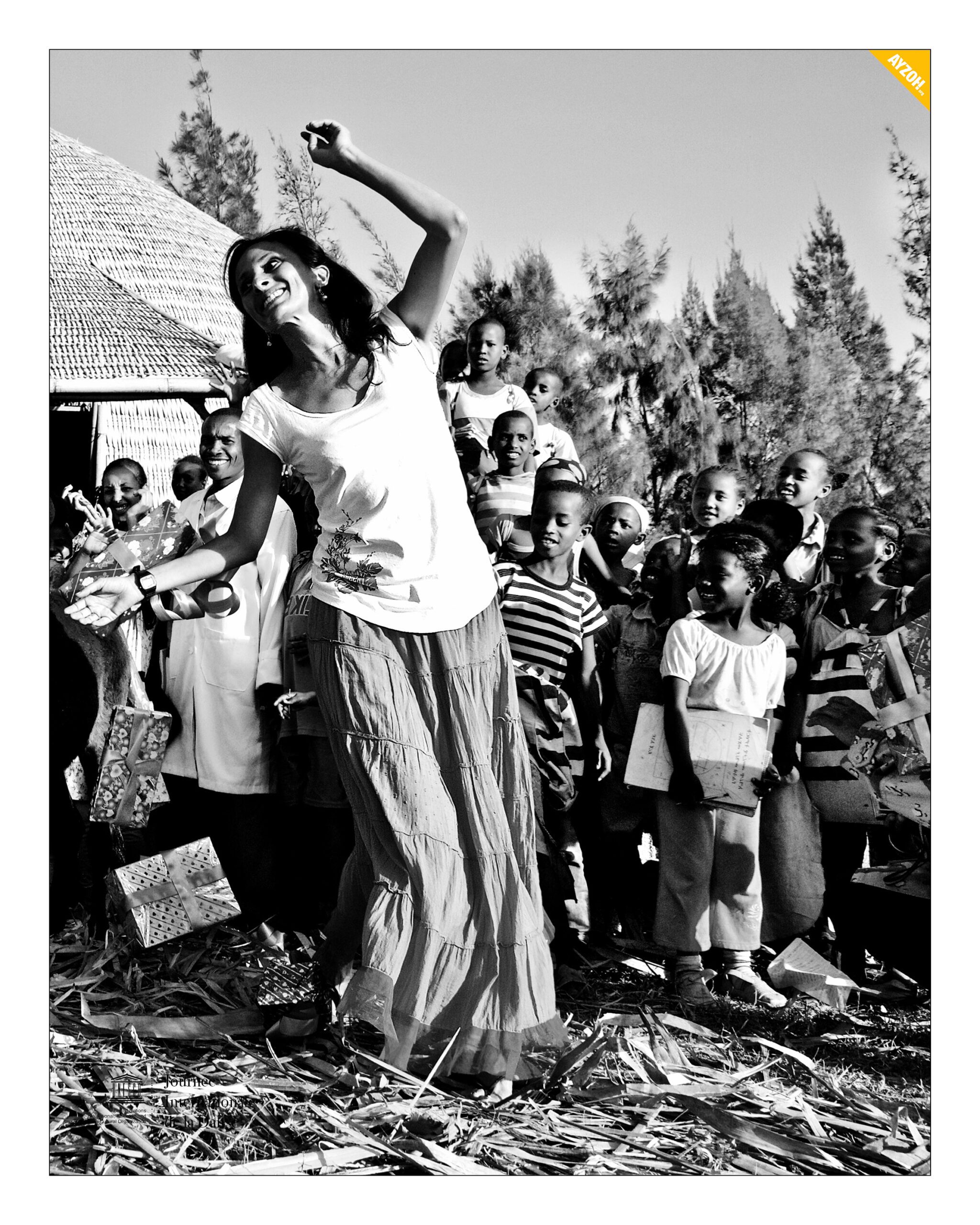
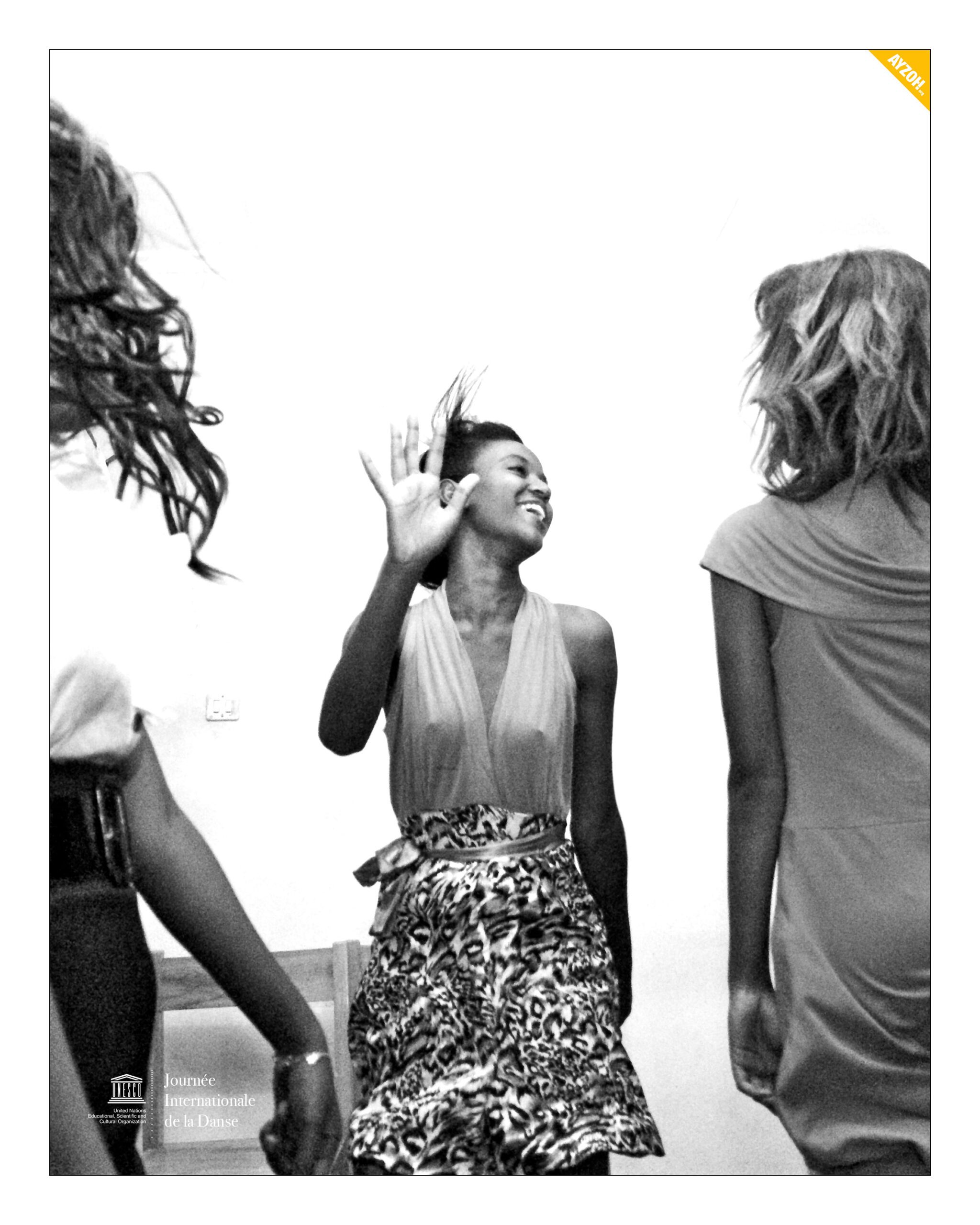
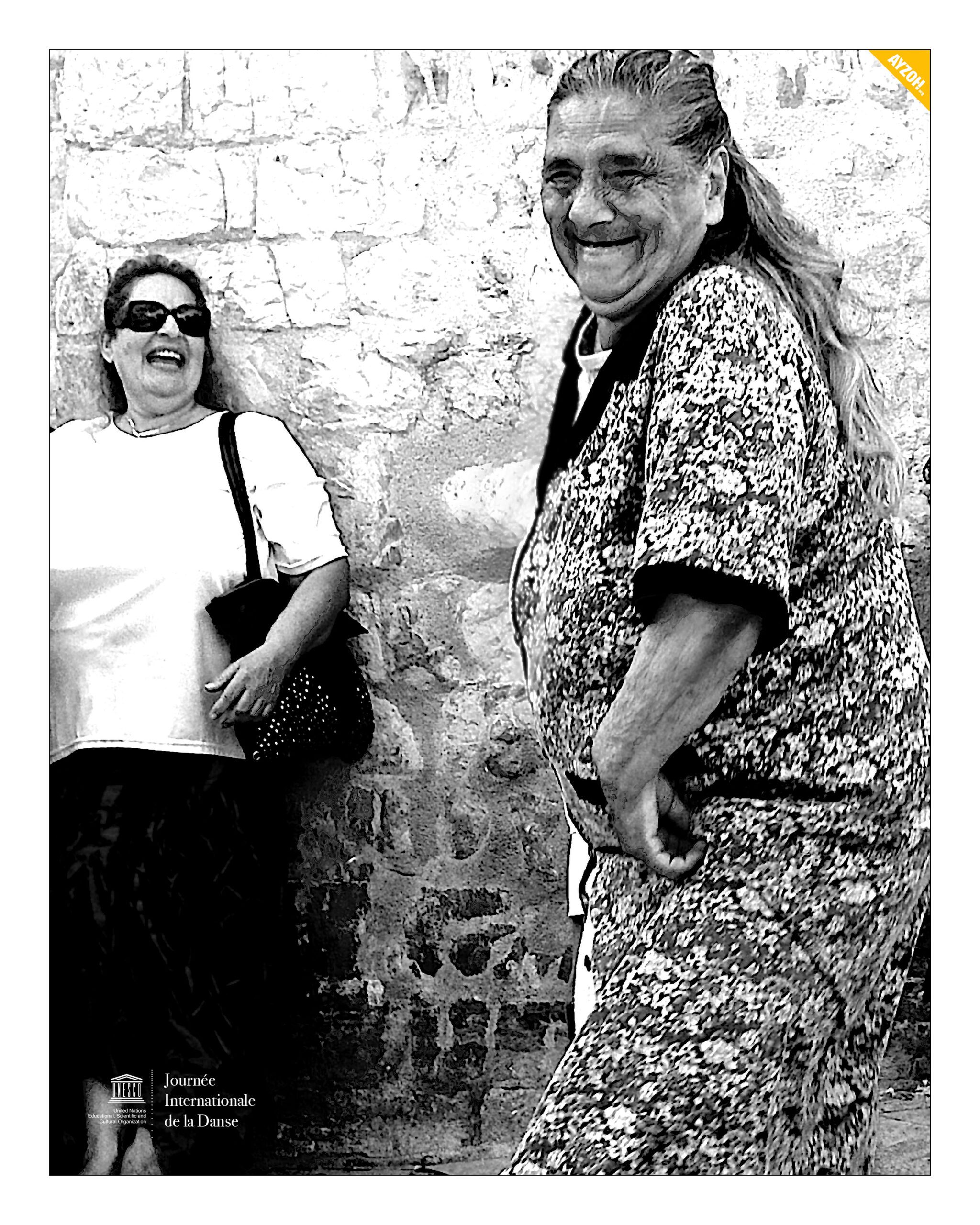
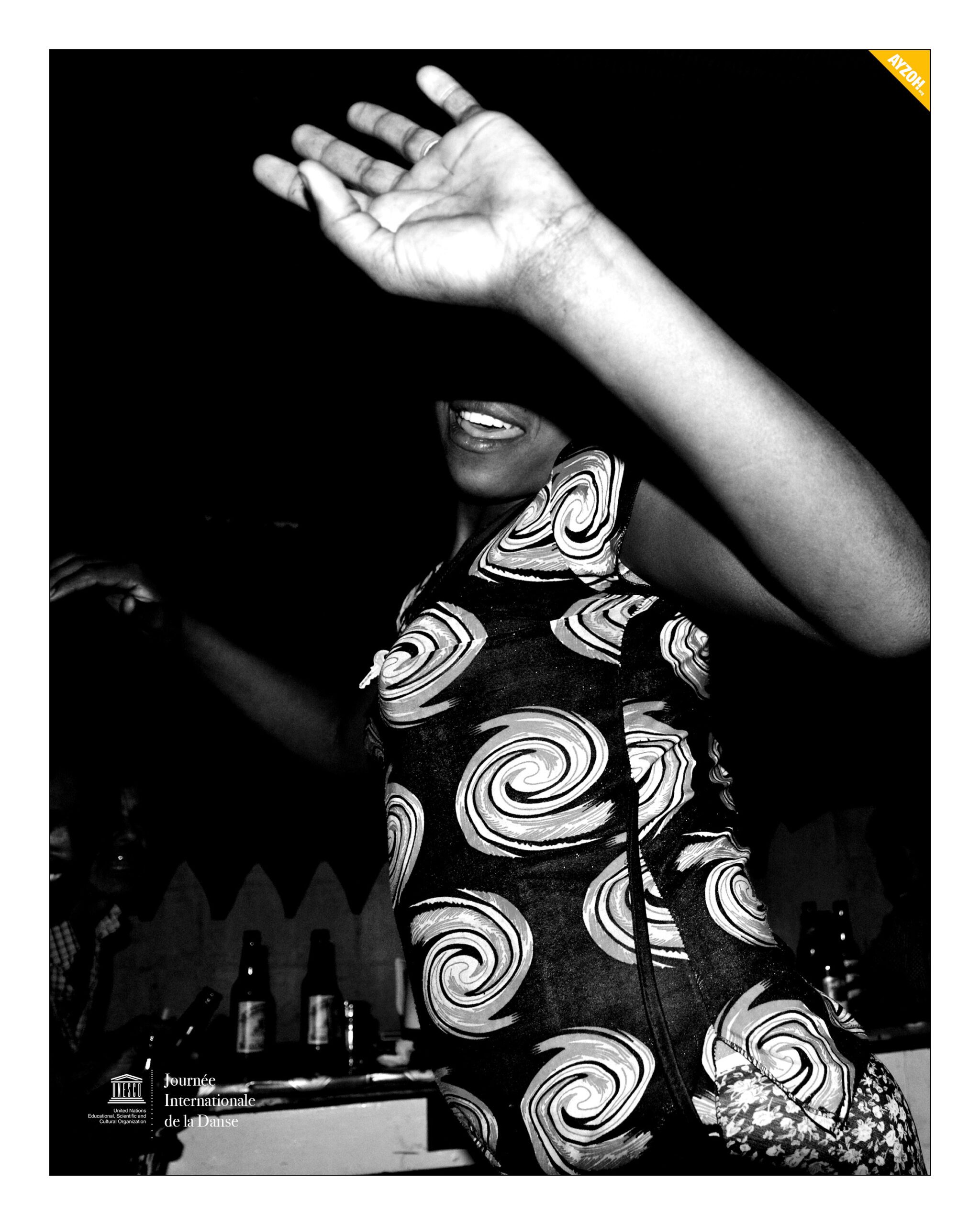
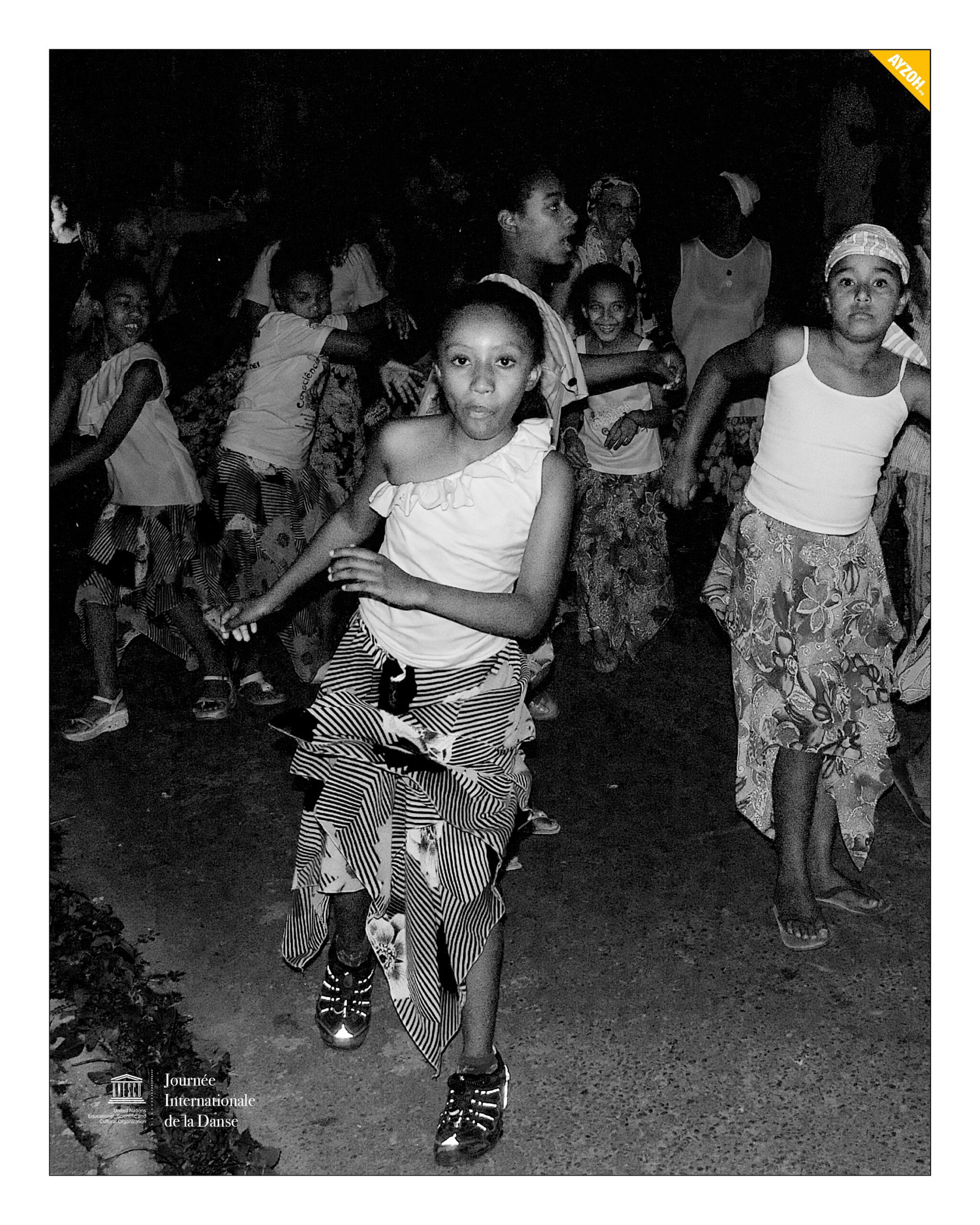
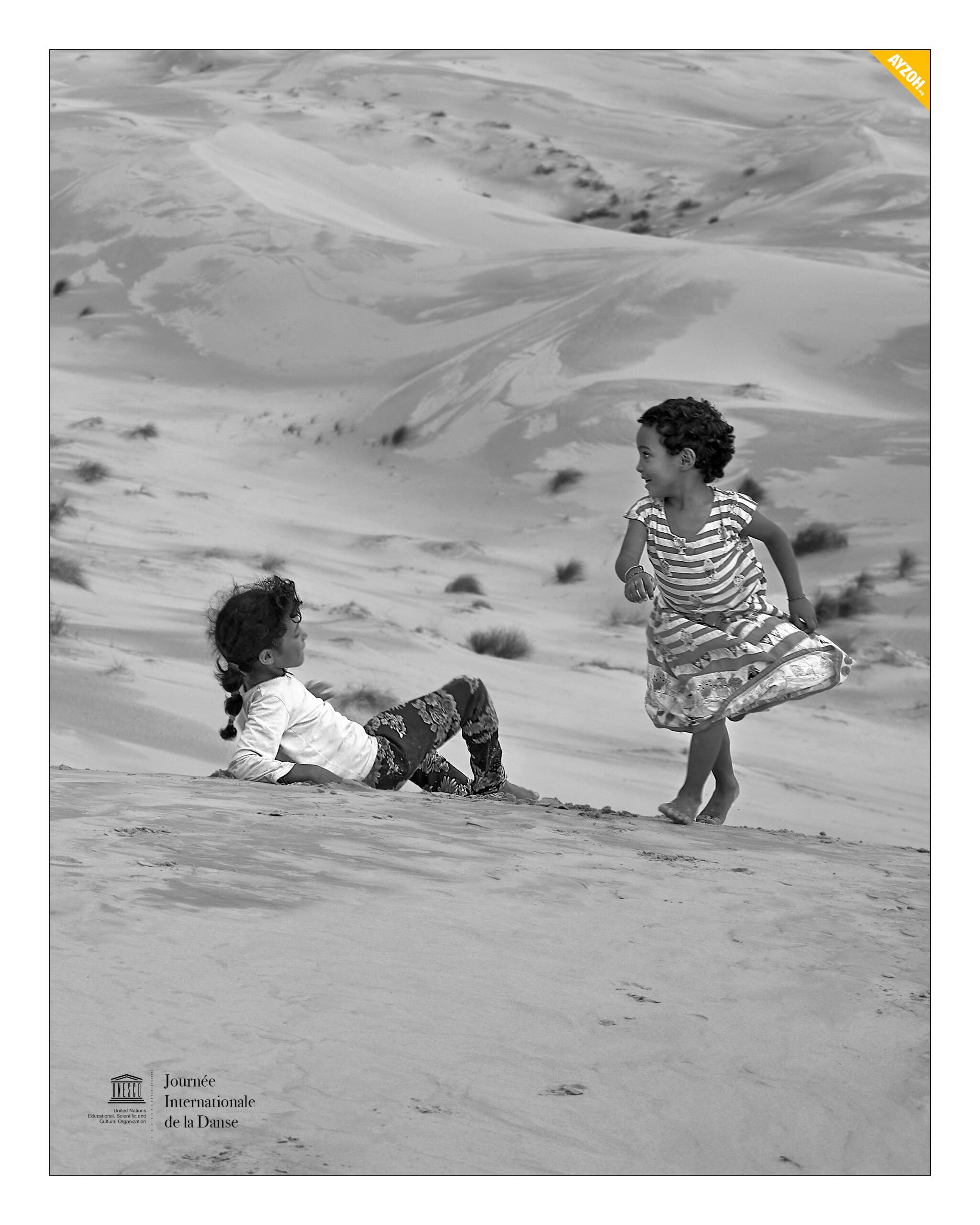
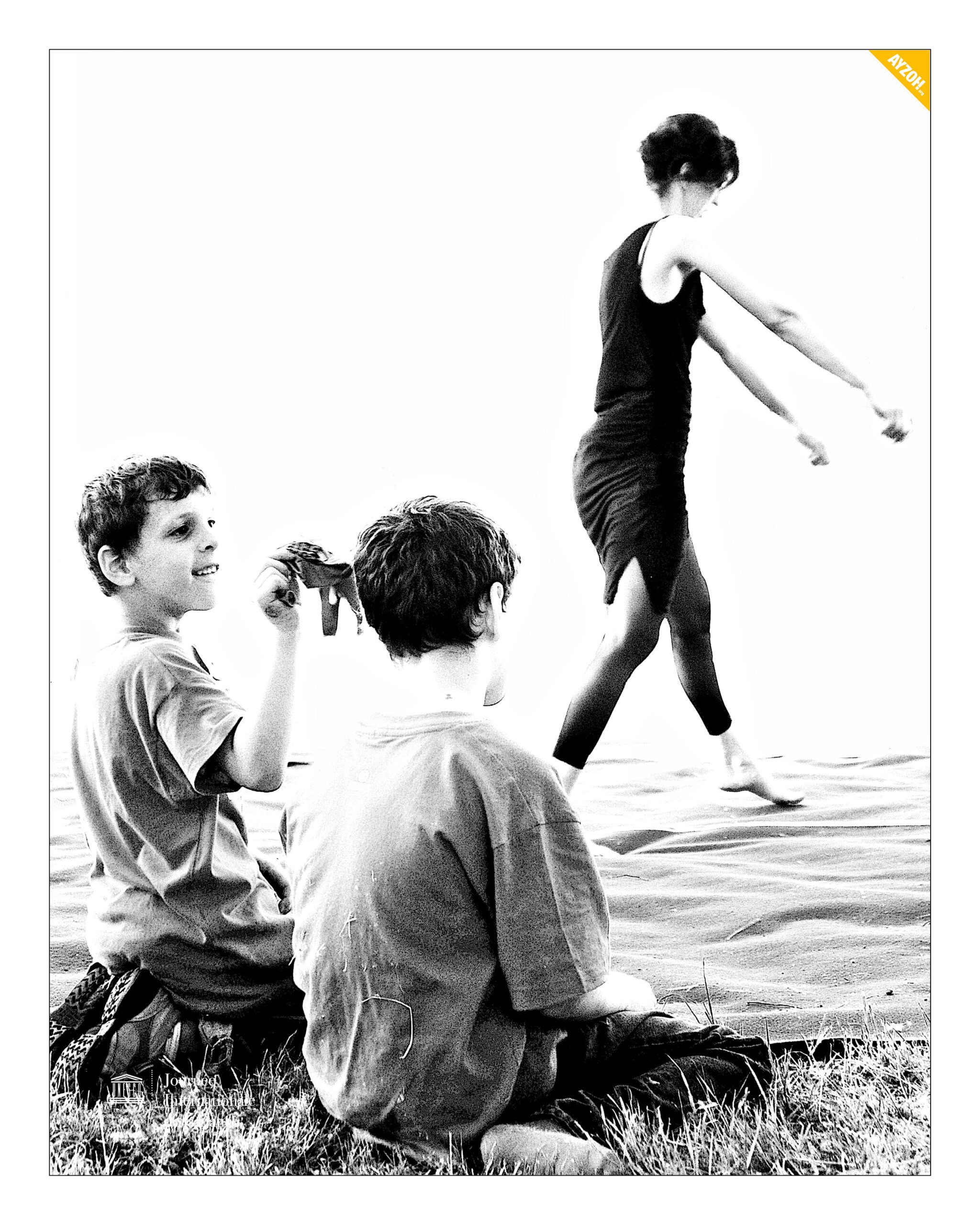
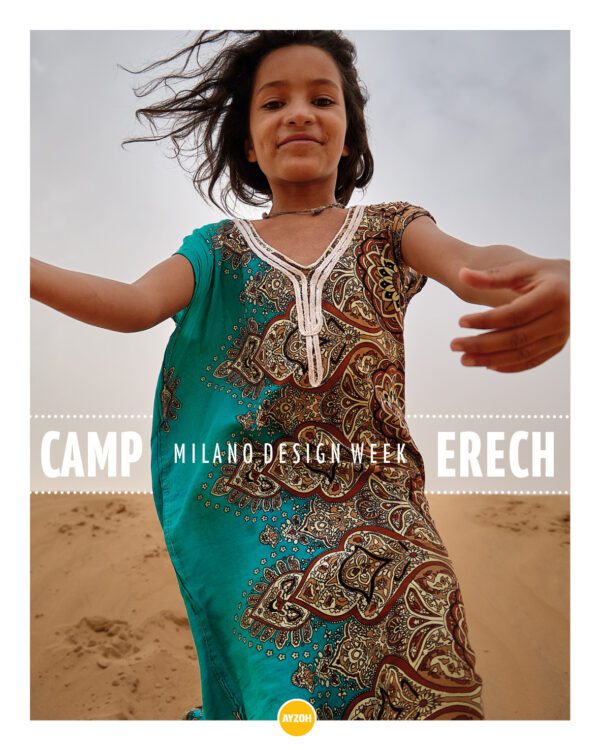
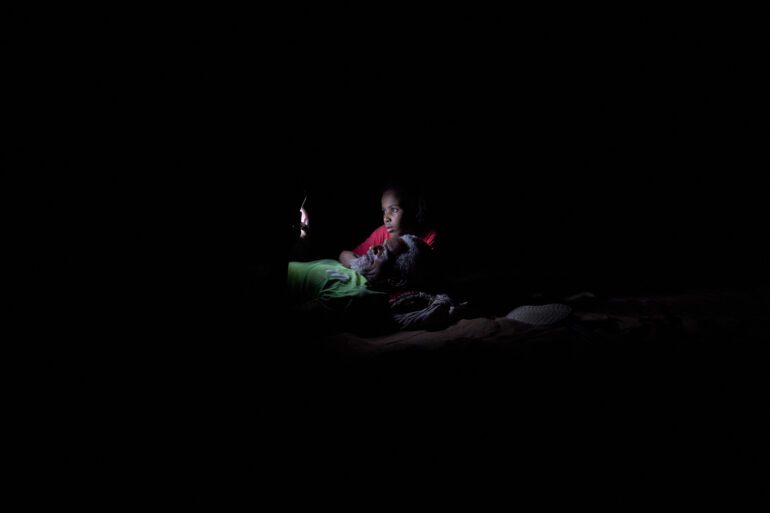
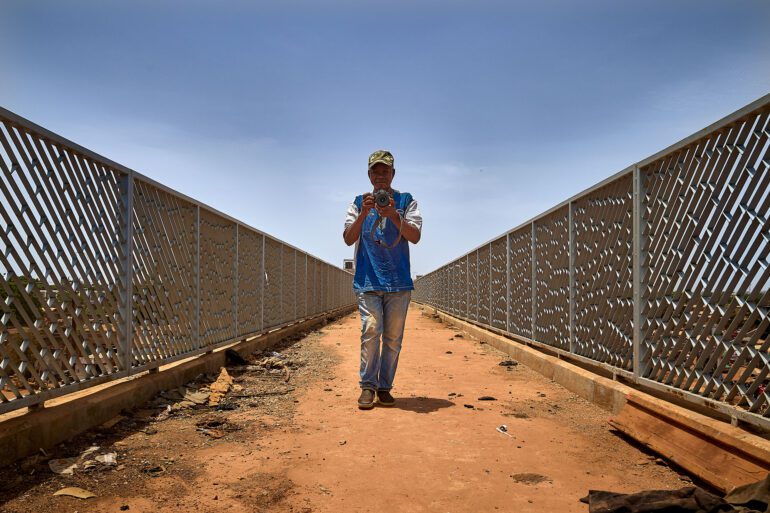
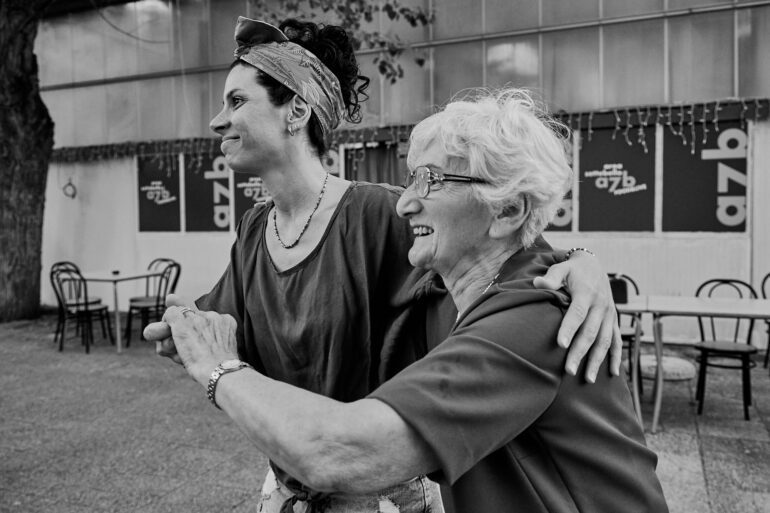
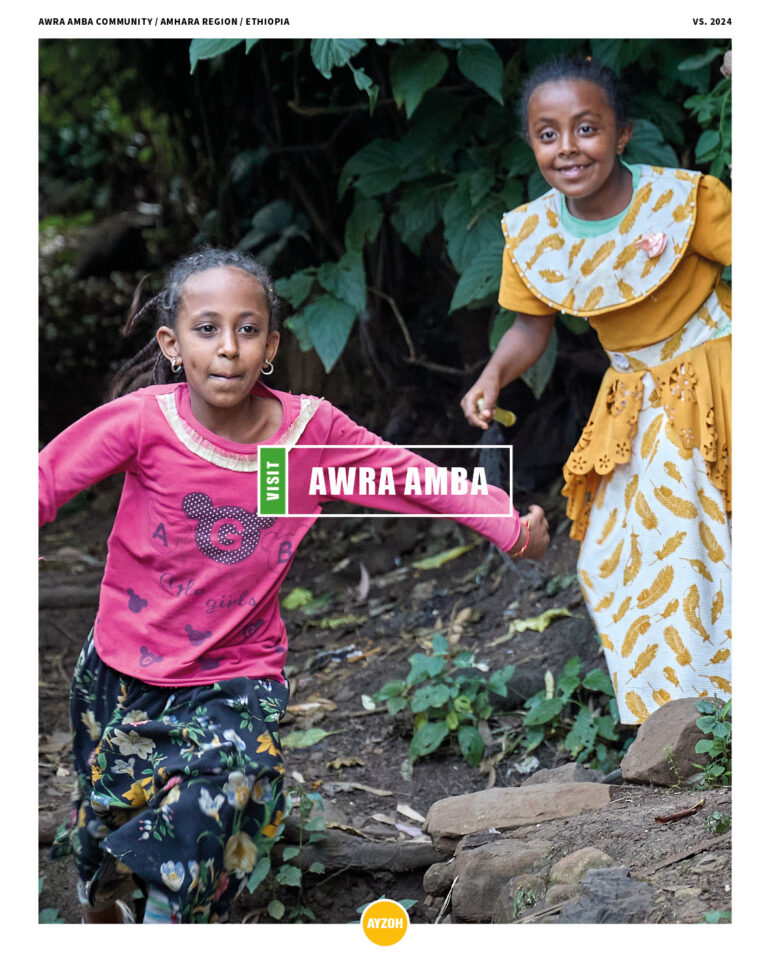
For International Dance Day, Ayzoh! presents a series of posters created for UNESCO, with photographs by Claudio Maria Lerario from Brazil, Burkina Faso, Ethiopia, France, Italy, Mauritania, and South Sudan.
International Dance Day, celebrated every year on April 29, was created in 1982 by the Dance Committee of the International Theatre Institute, UNESCO’s partner for the performing arts.
Its purpose is simple and radical: to honor dance as a universal language, one capable of crossing borders, cultures, politics, ages, and social conditions.
Dance begins before the stage
It appears in a child’s jump in a square, in bare feet on sand, in two women laughing under an open sky, in a hand lifted against the dark, in a body turning toward the sea.
It belongs to rehearsal rooms and public ceremonies, but also to courtyards, beaches, streets, villages, dunes, and schoolyards. It needs music, sometimes. Often it needs only breath, courage, and another person watching.
For Ayzoh!, this idea is not abstract. It is visible in the body
These posters were made from photographs taken by Claudio Maria Lerario in Ouro Preto, Brazil; in the savanna south of Ouagadougou, Burkina Faso; in Hawassa, Ethiopia; in Saintes-Maries-de-la-Mer, France; in Venice and Rimini, Italy; in Mauritania; and in Juba, South Sudan.
Different places, different histories, different light. Yet in each image, dance becomes a form of recognition. A person steps forward. A child leaves the ground. A woman answers rhythm with rhythm. A group gathers, watches, laughs, follows.
Nothing here asks for pity
Nothing turns culture into spectacle. The photographs stay close to the people they portray. They hold movement as evidence of life: fragile, disciplined, improvised, shared.
Dance becomes a way of occupying space with dignity. A way of saying: we are here, together, in this moment, with our bodies, our memory, our joy.
Nothing here asks for pity
Culture is part of survival itself. It carries knowledge. It protects belonging. It allows communities to speak in forms older and wider than words.
In this series, Ayzoh! follows that same belief. The posters do not present dance as a single tradition, technique, or geography. They present it as a human act. Across deserts, cities, coasts, villages, and rooms filled with music, the body keeps finding its language.
A foot touches the ground. A hand rises. Someone begins. And the world, for one instant, listens.
This work was made with care, time, and love. Join us: your support keeps stories like this alive.
A Bag of Stories began as a magazine, but the idea behind it is larger: to create a place where photographs, encounters and questions can continue after a project...
The Burkinabè photographer and Ayzoh! member has donated a body of work to the African Culture Fund. The photographs now become part of a collection rooted in the...
At Rimini’s Area Settebello, Movimento Centrale presented a study-performance with Collettivo Diversamente Danzanti. The work moves beyond the worn-out language...
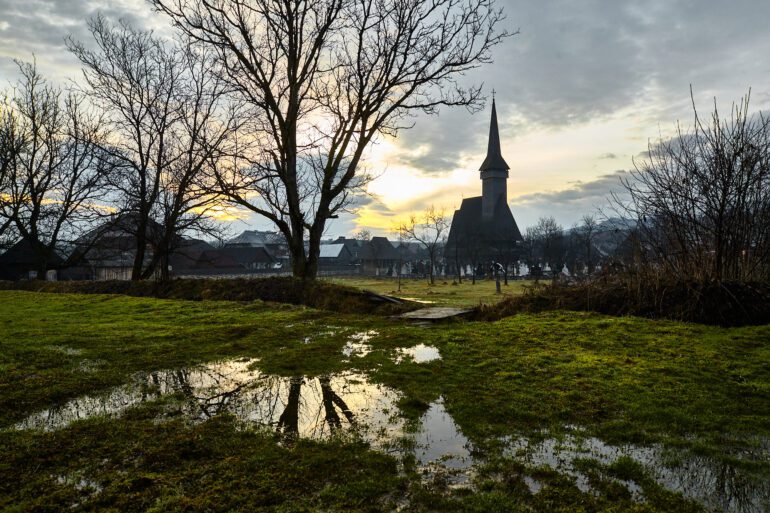
Maramureș lies in northwestern Romania, along the border with Ukraine. It is a region of hills, forests, valleys, wooden churches, carved gates, and villages where...
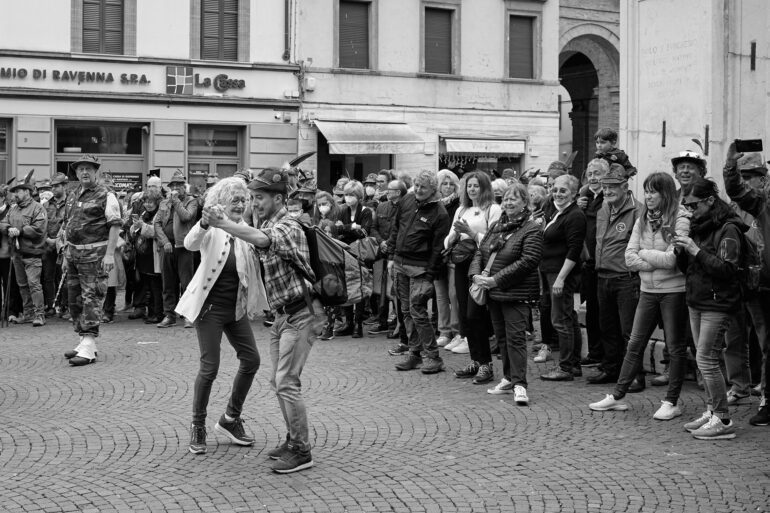
The Alpini gathering invites a harder kind of attention: one that recognizes community, listens to criticism, and refuses easy verdicts.
The annual Alpini gathering...
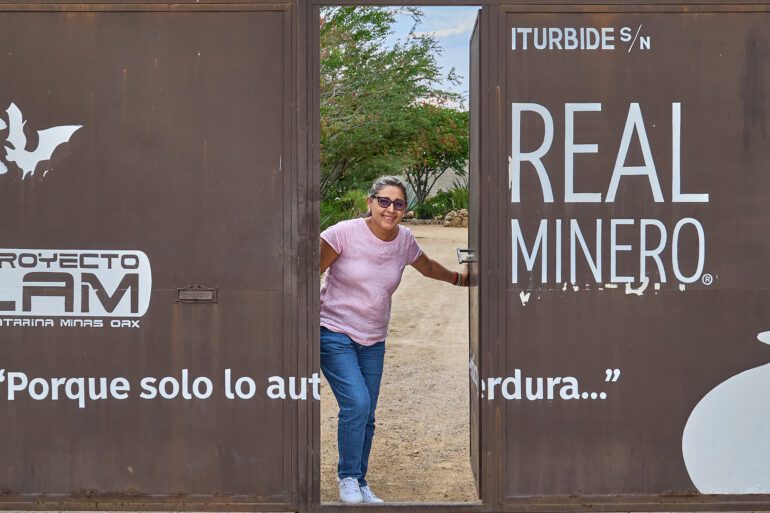
In Santa Catarina Minas, Real Minero keeps a family practice of agave distillation alive and helps sustain Biblioteca El Rosario, a community space where knowledge...
Presa Allende is a reservoir, a landscape and a community under pressure. You see contamination, invasive plants, lost jobs and migration. You also see dignity, responsibility and a long tradition of people who act when institutions fail. This book shows...
"Somos" is a call to listen, to witness, and to act. Created in deep collaboration with Maya communities across Guatemala, this project amplifies ancestral voices that have long been silenced, distorted, or ignored. At its heart lies the Popol Wuj, the...
El Rosario is a photo book and a tribute to a grassroots library in Oaxaca, Mexico. Created with the community of Santa Catarina Minas, it celebrates literacy, biodiversity, and collective imagination. All proceeds support the library and its partner...
Discover the vibrant streets of Ouagadougou, Burkina Faso, through the eyes of talented youth who transform urban spaces into creative playgrounds. Ayzoh! established the Centre Photographique de Ouagadougou (CPO), an inclusive photography center empowering...
Awra Amba, a visionary community in Ethiopia, challenges conventional norms by promoting equality, peace, and sustainability. As global ambassadors, Ayzoh! shares their inspiring story through an illuminating photographic book and dedicated website, highlighting...
An intimate homage to the maritime community of Isegran, Norway, this book celebrates the profound connection between humans and the sea. Explore themes of love, tradition, craftsmanship, and passion, reflecting on the sea’s timeless ability to unite...
We serve cookies. If you think that's ok, just click "Accept all". You can also choose what kind of cookies you want by clicking "Settings".
Read our cookie policy